
NDMA in ER Metformin: Several companies voluntarily recalling the diabetes medicine

NDMA in ER Metformin: Several companies voluntarily recalling the diabetes medicine

[FDA Update, July 13, 2020] – FDA is alerting patients and health care professionals to several voluntary recalls of extended-release (ER) metformin due to possible contamination with nitrosodimethylamine (NDMA) above the acceptable intake limit.

Note that FDA testing has not shown NDMA in immediate-release (IR) metformin products (the most commonly prescribed type of metformin).

IMPORTANT LINKS

Search database of recalled metformin products: https://www.fda.gov/drugs/drug-safety-and-availability/search-list-recalled-metformin-products

QA on NDMA impurities in metformin products: https://www.fda.gov/drugs/drug-safety-and-availability/questions-and-answers-ndma-impurities-metformin-products

Information about nitrosamine impurities in medications: https://www.fda.gov/drugs/drug-safety-and-availability/information-about-nitrosamine-impurities-medications

Guidance for the use of oral contraception

Guidance for the use of oral contraception

Contributed by: Dr. Collins E. M. Okoror, MBBS (Ib), MBA, PDip (HRM), FWACS (OBGYN), FMCOG, MPH (RFH)

Consultant Obstetrician and Gynaecologist

Combined oral contraception (COC)

The COCs are an effective form of contraception combining the effect of both the progesterone and oestrogen hormones. Basically, they exhibit their contraceptive effects by inhibiting ovulation, thickening of the cervical mucus and thinning of the endometrium. They should be taken for consecutive days at about the same time of the day. Various forms are available at different proportions of the hormones.

COC containing ≤30 µg of ethinylestradiol (EE) with levonorgestrel (LNG) or noresthisterone (NET) is considered the first choice. Microgynon, a 2nd generation COC, containing 30 µg of EE and 150 µg of LNG, has become the first choice in women requesting COCs.

The second line 2nd generation COC pills include:

  • Low strength NET and EE e.g. Loestrin,
  • Standard strength NET and EE e.g. Brevinor, and
  • Phased COC EE and LNG e.g. Logynon.

The 3rd generation COCs have an increased risk of venous thromboembolism, patients should be assessed and counselled for this when they are being considered. They contain standard strength and low strength of desogestrel (DSG) and EE as first and second lines, respectively. Examples

  • Standard strength e.g. Marvelon, Desofem (DSG 150 µg & EE 30 µg)
  • Low strength e.g. Mercilon (DSG 150 µg & EE 20 µg).

Initiating COCs

The COCs are best started within the day 1–5 of the cycle. When started after day 5, an additional barrier method of contraception should be used for the first 7 days of initiation. Pregnancy test should be done after 3 weeks if unprotected sexual intercourse (UPSI) has occurred since the last period or if a woman who is amenorrhoeic and with negative pregnancy test has had UPSI in the last 3 weeks.

Switching pills

It is not uncommon to switch pills for perceived or actual adverse effects. Some of the conditions necessitating pills switch include:

Breakthrough bleeding – Before switching brand, check for compliance, exclude pregnancy, drug-drug interaction, infection and local causes of bleeding per vaginam. A switch should be made to the standard strength 2nd generation COC or the 3rd generation COC when the earlier is not available or to the triphasic COC when the earlier two are not available.

Nausea or headache – Pregnancy and eye pathologies should be excluded in these circumstances before switching brands. Where appropriate, a switch should be made to the low strength 2nd generation COC or the low strength 3rd generation COC where the earlier is not available.

Acne, bloatedness, or breast tenderness – A switch should be to the standard strength 3rd generation COC. Where this is unavailable or inappropriate, the client should be referred to the doctor for further evaluation.

Weight gain – Clients should be offered general advice on diet, exercises and being healthy. Where a switch is necessary, it should be to the standard strength 3rd generation COC.

Reduced libido – This may be psychological (e.g., relationship issues, less motivation) and should necessitate a referral to the doctor for evaluation.

Mood swings – Take medical history to determine if the patient is experiencing mood changes all the time or in relation to withdrawal bleed. If it is ascertained that the mood swings are caused by the Microgynon after detailed history, a switch should be made to standard strength 3rd generation COC.

Switching to another brand

When switching pills, the hormone-free interval (HFI) should be omitted, and the new pills commenced the next day i.e. day 22 of the previous pills or within day 1–2 of HFI. If 3–7 hormone-free pills or days are taken, the new brand should be commenced with barrier methods for the first 7 days. It is important to carry out a thorough evaluation of the client before considering a switch to another brand of COC.

Switching to progesterone-only pill (POP)

When switching from COC to POP, it should be started without a break within the day 1–2 HFI or during week 2–3 of COC. When the switch is necessary during week 1 of COC or day 3-7 HFI and in absence of UPSI since start of HFI, additional barrier method should be used for 2 days.

Progesterone-only pills (POP)

The progesterone only contraceptive pills are effective alternatives for clients in whom the oestrogen effects of the COC are undesirable or contraindicated and have no contraindication to the POPs. They have similar mechanisms of action with COC, though at varying degrees. Various forms are available, but the common ones are the NET 350 µg, LNG 30 µg and DSG 75 µg. While NET and LNG administration allows for a 3-hour missed pill window, DSG POP allows a window of 12 hours and is therefore, an option for those who have trouble in complying with stricter dosage regimen of other POPs.

Initiating POP

Like the COC, it is best taken daily at the same time each day beginning from day 1–5 of the cycle. When started after day 5, an additional barrier method of contraception should be used for the first 2 days of initiation. Pregnancy test should be done after 3 weeks if UPSI has occurred since the last period or if a woman who is amenorrhoeic and with a negative pregnancy test has had UPSI in the last 3 weeks.

References

  1. Faculty of Sexual and reproductive Healthcare (FSRH). Combined hormonal contraception. London, UK: Clinical Effectiveness Unit, FERH; January 2019 (amended July 2019).
  2. Faculty of Sexual and Reproductive Healthcare (FSRH). Progestogen-only pills. London, UK: Clinical Effectiveness Unit, FSRH; March 2015 (amended April 2019).
  3. Telford and Wrekin Clinical Commissioning Group. Guidelines for initiation and switching of combined oral contraception. Telford, UK: Telford and Wrekin CCG; December 2016. Available at: https://www.telfordccg.nhs.uk/your-health/medicines-management/prescribing-guidelines/sexual-health-1/2242-oral-contraception-flowchart-and-guidance-v2/file

WHO welcomes preliminary results about dexamethasone use in treating critically ill COVID-19 patients

WHO welcomes preliminary results about dexamethasone use in treating critically ill COVID-19 patients

[WHO News release, June 16, 2020] – The World Health Organization (WHO) welcomes the initial clinical trial results from the United Kingdom (UK) that show dexamethasone, a corticosteroid, can be lifesaving for patients who are critically ill with COVID-19. For patients on ventilators, the treatment was shown to reduce mortality by about one third, and for patients requiring only oxygen, mortality was cut by about one fifth, according to preliminary findings shared with WHO.

The benefit was only seen in patients seriously ill with COVID-19, and was not observed in patients with milder disease. 

“This is the first treatment to be shown to reduce mortality in patients with COVID-19 requiring oxygen or ventilator support,” said Dr Tedros Adhanom Ghebreyesus, WHO Director-General. “This is great news and I congratulate the Government of the UK, the University of Oxford, and the many hospitals and patients in the UK who have contributed to this lifesaving scientific breakthrough.”

Dexamethasone is a steroid that has been used since the 1960s to reduce inflammation in a range of conditions, including inflammatory disorders and certain cancers. It has been listed on the WHO Model List of Essential Medicines since 1977 in multiple formulations, and is currently off-patent and affordably available in most countries.

The researchers shared initial insights about the results of the trial with WHO, and we are looking forward to the full data analysis in the coming days. WHO will coordinate a meta-analysis to increase our overall understanding of this intervention. WHO clinical guidance will be updated to reflect how and when the drug should be used in COVID-19.

Source:

WHO News release, June 16, 2020

Evidence for the Treatment of Depression in Children and Adolescents

Evidence for the Treatment of Depression in Children and Adolescents

Contributed by: Anuolu Bank-Oni, PharmD, CDE, BCGP

Childhood depression can have long-lasting developmental consequences on mental and physical health. Whereas cognitive behavioural therapy and fluoxetine are currently recommended for adolescents with moderate to severe depression, evidence is lacking in regard to treatment of children.

The Agency for Healthcare Research and Quality published a systematic review evaluating the efficacy and safety of nonpharmacological, pharmacological, and combination interventions for child (age range: 7 – 12 years) and adolescent (age range: 12 – 18 years) depressive disorders (major depressive disorder [MDD], persistent depressive disorder [PDD], and depressive disorder not otherwise specified [DD NOS]).

A search of MEDLINE, the Cochrane Library, the Cochrane Central Trials Registry, the Cumulative Index to Nursing and Allied Health Literature, and PsycINFO databases for all trials published up to May 29, 2019 produced 874 studies which were then screened. Of these, 60 studies were deemed eligible for analysis. Approximately 77% of the studies involved paediatric patients with a confirmed diagnosis of MDD only, while the remaining studies included a range of depressive disorders (MDD, PDD, DD NOS, or combinations).

The data revealed the following:

  • In paediatric (children and adolescent) patients, psychotherapy (CBT or family therapy) may improve depressive symptoms, response, and functional status. No adverse events were reported with psychotherapy.
  • A combination of medication plus psychotherapy may improve depressive symptoms, remission, and functional status when compared with psychotherapyalone.
  • CBT and combination therapy (e.g. CBT plus fluoxetine) may be beneficial in patients with comorbid attention deficit hyperactivity disorder (ADHD).
  • Selective serotonin reuptake inhibitors (SSRIs) may improve response and functional status in patients with MDD.
  • For adolescents with MDD, there is an increased risk of serious adverse events, including suicidal ideation, with SSRIs. The risk of withdrawals due to adverse events is also increased. Paroxetine was noted as having an increased risk of suicidal ideation. Other SSRIs may have similar concerns, but there were insufficient data available. The Food and Drug Administration (FDA) has issued warnings on the suicide risk associated with SSRI use in pediatrics.
  • For adolescents with MDD, escitalopram, fluoxetine, CBT, and combination therapy (fluoxetine plus CBT) may improve symptoms.
  • The analyses found no evidence of benefit with serotonin and norepinephrine reuptake inhibitors (SNRI), tricyclic antidepressants (TCA), and monoamine oxidase inhibitors (MAOI).

Available evidence is focused on treating adolescents with MDD. Additional research is needed to better understand appropriate treatment regimens for children, depressive disorders other than MDD, and the long-term effects of these interventions.

Reference:

  • Viswanathan M, Kennedy SM, McKeeman J, et al. Treatment of Depression in Children and Adolescents: A Systematic Review [Internet]. Rockville (MD): Agency for Healthcare Research and Quality (US); 2020 Apr. (Comparative Effectiveness Review, No. 224.) Evidence Summary

Metformin Recall Alert: FDA finds unacceptable levels of cancer-causing impurity in some brands of metformin

Metformin Recall Alert: FDA finds unacceptable levels of cancer-causing impurity in some brands of metformin

[FDA News Release, May 28, 2020] – The U.S. FDA has announced that several brands of metformin have tested positive for unsafe levels of the nitrosamine impurity, N-Nitrosodimethylamine (NDMA). NDMA is classified as a probable human carcinogen (a substance that could cause cancer) based on results from laboratory tests.

The agency has directed 5 companies to begin voluntary recall of the affected metformin extended-release (ER) formulations. The affected companies and metformin products are published on FDA’s website.

FDA is advising patients to continue taking metformin tablets even after recalls occur, until they consult with their health care professional who can prescribe a replacement. Patients with type 2 diabetes could face dangerous health risks if they stop taking their prescribed metformin.

Healthcare professionals should continue to prescribe metformin when clinically appropriate; FDA testing has not shown NDMA in immediate-release (IR) metformin products (the most commonly prescribed type of metformin). The agency is working with manufacturers of the recalled tablets to identify the source of the NDMA impurity. At this time, the elevated levels of NDMA have been found in some finished-dose tablets of the ER formulation but have not been detected NDMA in samples of the metformin active pharmaceutical ingredient.

Health Canada Important Safety Information, March 11, 2020

Earlier in Canada, certain lots of metformin have also been recalled due to the presence or possible presence of a nitrosamine impurity called N-Nitrosodimethylamine (NDMA) above the acceptable limit:

February 5, 2020 – Apotex Inc. recalled 8 lots of the diabetes medication APO-Metformin ER (extended release) 500 mg tablets

February 26, 2020 – Ranbaxy Pharmaceuticals Canada Inc. recalled six lots of its prescription RAN-Metformin drug from the Canadian market.

March 11, 2020 – JAMP Pharma Corporation voluntarily recalled all 26 lots of its prescription Metformin drug from the Canadian market (Metformin DIN 02380196 [500mg] and Metformin DIN 02380218 [850mg]) as a precautionary measure. NDMA test results are not available for this product; this recall has been initiated because of the potential presence of nitrosamine impurities in the finished product.

Details of the recalled metformin products are published on Health Canada website.

Sources:

  1. FDA News Release, May 28, 2020
  2. Health Canada Important Safety Information, March 11, 2020

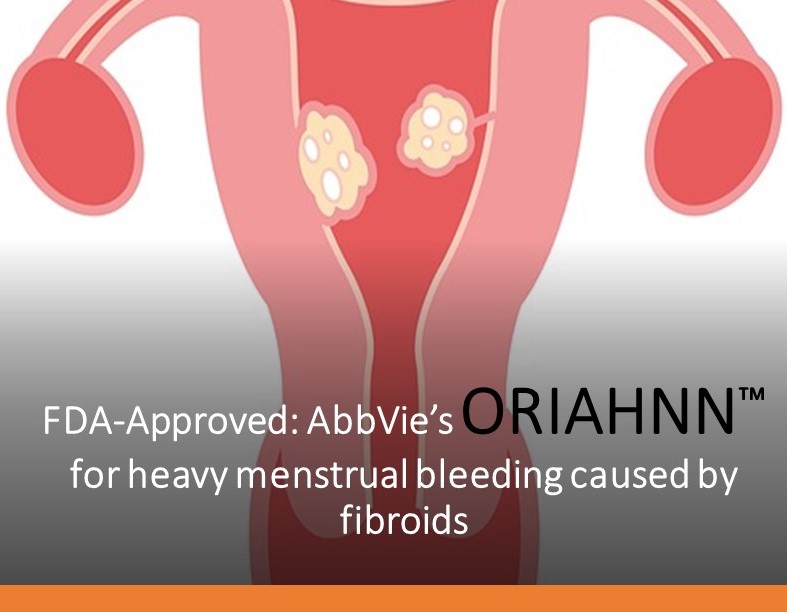
FDA-Approved: AbbVie’s ORIAHNN™ for heavy menstrual bleeding caused by fibroids

FDA-Approved: AbbVie’s ORIAHNN™ for heavy menstrual bleeding caused by fibroids

[FDA News Release, May 29, 2020] – The U.S. Food and Drug Administration today granted approval to ORIAHNN™ (an estrogen and progestin combination product consisting of elagolix, estradiol and norethindrone acetate) capsules, co-packaged for oral use, for the management of heavy menstrual bleeding associated with uterine leiomyomas (fibroids) in premenopausal women.

Oriahnn is the first FDA-approved non-surgical, oral medication option for the management of heavy menstrual bleeding associated with uterine fibroids in pre-menopausal women

Uterine fibroids, also called leiomyomas, are estrogen and progesterone-dependent non-cancerous tumors of the uterus and are the most common type of benign tumor in women of reproductive age, affecting up to 70 percent of Caucasian women and up to 80 percent of African American women by age 50. Fibroids can cause heavy menstrual bleeding, pain, bowel or bladder problems and infertility; some women may not experience any symptoms. They typically resolve after menopause but are a leading reason for hysterectomy (surgical removal of the uterus) in the United States when they cause severe symptoms.

Oriahnn may cause bone loss over time, and the loss in some women may not be completely recovered after stopping treatment. Because bone loss may increase the risk for fractures, women should not take Oriahnn for more than 24 months. Health care professionals may recommend a bone density scan (called DXA scan) when starting women on Oriahnn and periodically while on treatment.

The most common side effects of Oriahnn were hot flushes (sudden feelings of warmth), headache, fatigue and irregular vaginal bleeding. The drug label for Oriahnn includes a Boxed Warning about the risk of vascular events (strokes) and thrombotic or thromboembolic disorders (blood clots), especially in women at increased risk for these events. Patients should stop Oriahnn if a blood clot, heart attack or stroke occurs. Oriahnn is contraindicated (not to be used under any circumstance) in women with a history of or current blood clots and in women at increased risk for blood clots, including women over 35 years of age who smoke or women with uncontrolled hypertension. Other contraindications include known osteoporosis, a history of or current breast cancer or other hormonally sensitive cancer, liver disease or undiagnosed abnormal uterine bleeding.

Oriahnn does not prevent pregnancy. Women should use non-hormonal contraception during treatment and for one week after discontinuing the medication. Oriahnn may delay the detection of a pregnancy because it changes menstrual bleeding patterns. Oriahnn may increase blood pressure, which should be monitored in women with controlled hypertension during treatment with Oriahnn. Patients should be advised on signs and symptoms of liver injury. Patients are advised to seek medical attention if they experience suicidal ideation or behavior, new onset or worsening depression, anxiety or other mood changes. Patients taking Oriahnn may experience hair loss (alopecia). There is a risk of allergic reaction with Oriahnn because its inactive ingredient, FD&C Yellow No. 5 (tartrazine) may cause allergic-type reactions (including bronchial asthma) in some women.

Sources:

  1. FDA News Release, May 29, 2020
  2. AbbVie Press Release, May 29, 2020
  3. Oriahnn full prescribing information

FDA approves IV Artesunate for Treatment of Severe Malaria in the US

FDA approves IV Artesunate for Treatment of Severe Malaria in the US

[FDA News Release, May 26, 2020] – The U.S. Food and Drug Administration (FDA) has approved artesunate for injection to treat severe malaria in adult and pediatric patients. Treatment of severe malaria with intravenous (IV) artesunate should always be followed by a complete treatment course of an appropriate oral antimalarial regimen.

In Nigeria, the antimalarial medicine recommended for the treatment of severe malaria is injectable (IV/IM) Artesunate. Where this is not readily available, intramuscular artemether or intravenous/ intramuscular quinine can be used as alternatives.

(Nigeria’s National Guidelines for Diagnosis and Treatment of Malaria, 3rd ed. Federal Ministry of Health National Malaria and Vector Control Division, Abuja-Nigeria, May 2015)

Prior to this approval, IV artesunate was only available to patients through the FDA’s Expanded Access program, which allowed the U.S. Centers for Disease Control and Prevention (CDC) to provide IV artesunate to U.S. patients with severe malaria and to patients with uncomplicated malaria who are unable to take oral medications under an investigational new drug (IND) protocol. There has been no FDA-approved drug for treatment of severe malaria in the United States since the marketing of quinine was discontinued by the manufacturer in March 2019.

The safety and efficacy of IV artesunate for the treatment of severe malaria was primarily evaluated in a randomized controlled trial in Asia (Trial 1) and a supportive published randomized controlled trial in Africa (Trial 2).

Trial 1 enrolled 1,461 patients who received either IV artesunate or the comparator drug quinine and included 202 pediatric patients younger than 15 years. Trial 2 included 5,425 randomized pediatric patients younger than 15 years of age with severe malaria who were treated with artesunate or quinine. In both trials, the number of patients treated with artesunate who died in the hospital was significantly lower than the number who died in the control group treated with quinine.

In Trial 1, the most common adverse reactions in patients with malaria treated with IV artesunate were acute renal failure requiring dialysis, hemoglobinuria, and jaundice. The safety profile in Trial 2 was generally similar to Trial 1.

Artesunate should not be used in patients with known serious allergy to artesunate such as anaphylaxis.

Source: FDA News Release, May 6, 2020

FDA Approves Evofem’s Phexxi Vaginal Gel to Prevent Pregnancy in Females of Reproductive Potential

FDA Approves Evofem's Phexxi Vaginal Gel to Prevent Pregnancy in Females of Reproductive Potential

[Evofem News Releases, May 22, 2020] – Evofem Biosciences, Inc. today announced that the U.S. Food and Drug Administration (FDA) has approved Phexxi™ (lactic acid, citric acid and potassium bitartrate) vaginal gel for the prevention of pregnancy in females of reproductive potential for use as an on-demand method of contraception.

Phexxi is the first non-hormonal, on-demand, vaginal pH regulator (VPR) contraceptive designed to maintain vaginal pH within the normal range of 3.5 to 4.5 – an acidic environment that is inhospitable to sperm.

“There have been a limited number of advances in birth control over the last two decades; Phexxi represents an important step forward in women’s health,” said Michael A. Thomas, M.D., Chair of the Department of Obstetrics and Gynecology at the University of Cincinnati College of Medicine.  “Many of my patients have cycled through numerous contraceptive options and still have not found the right fit for their sexual and reproductive needs. Phexxi offers women freedom from hormones and control over how they choose to prevent pregnancy. I look forward to offering this new on-demand option to my patients.”

IMPORTANT SAFETY INFORMATION

Indications and usage

Phexxi™ is indicated for the prevention of pregnancy in females of reproductive potential for use as an on-demand method of contraception.

Limitations of use

Phexxi™ is not effective for the prevention of pregnancy when administered after intercourse.

Warnings and precautions

Few cases (0.36%) of adverse reactions of cystitis, pyelonephritis and other upper urinary tract infection (UTI) have been reported in Phexxi™ clinical studies. Of these, one case of pyelonephritis was considered serious and required hospitalization. Avoid use of Phexxi™ in females of reproductive potential with history of recurrent urinary tract infection or urinary tract abnormalities.

Adverse reactions

Most common adverse reactions (≥2%) were vulvovaginal burning sensation, vulvovaginal pruritus, vulvovaginal mycotic infection, urinary tract infection, vulvovaginal discomfort, bacterial vaginosis, vaginal discharge, genital discomfort, dysuria, and vulvovaginal pain.

Patients should be counseled on the following:

  • To contact and consult their healthcare provider for severe or prolonged genital irritation or experiencing urinary tract symptoms.
  • To discontinue Phexxi™ if they develop a local hypersensitivity reaction.
  • That Phexxi™ does not protect against HIV infection or other sexually transmitted infections.

Sources:

  1. FDA-Approved Label for Phexxi®
  2. Full Prescribing Information for Phexxi® is available at Phexxi.com
  3. Evofem Press Release, May 22, 2020

Chloroquine or hydroxychloroquine for COVID-19: FDA cautions against use due to risk of life-threatening cardiac rhythm problems

Chloroquine or hydroxychloroquine for COVID-19: FDA cautions against use due to risk of life-threatening cardiac rhythm problems

Essential practice updates supported by Pemason Pharmaceuticals Ltd

[FDA Drug Safety Communication, April 24, 2020] – The U.S. Food and Drug Administration (FDA) is aware of reports of serious heart rhythm problems in patients with COVID-19 treated with chloroquine or hydroxychloroquine, often in combination with azithromycin and other QT prolonging medicines. The agency is reminding healthcare professionals and patients that chloroquine and hydroxychloroquine have not been shown to be safe and effective for treating or preventing COVID-19.  They are being studied in clinical trials for COVID-19 and have limited use under Emergency Use Authorization (EUA) for treatment of the virus only in hospitalized patients with careful heart monitoring.

Chloroquine and hydroxychloroquine can cause abnormal heart rhythms such as QT interval prolongation and a dangerously rapid heart rate called ventricular tachycardia.  These risks may increase when these medicines are combined with other medicines known to prolong the QT interval, including the antibiotic azithromycin, which is also being used in some COVID-19 patients without FDA approval for this condition.  Patients who also have other health issues such as heart and kidney disease are likely to be at increased risk of these heart problems when receiving these medicines.

FDA-approved indications for chloroquine and hydroxychloroquine include treatment and prophylaxis of malaria; hydroxychloroquine is also approved for autoimmune conditions such as chronic discoid lupus erythematosus, systemic lupus erythematosus in adults, and rheumatoid arthritis.

Patients who are on chloroquine or hydroxychloroquine for the approved indications are being advised to continue taking their medicine as prescribed. The benefits of these medicines outweigh the risks at the recommended doses for these conditions. Avoid buying medications from unauthorized or unregistered premises.

Healthcare professionals should be aware of adverse effects associated with chloroquine or hydroxychloroquine:

  • QT prolongation
  • increase the risk of QT prolongation in patients with renal insufficiency or failure
  • increase insulin levels and insulin action causing increased risk of severe hypoglycemia
  • cause haemolysis in patients with Glucose-6-Phosphate Dehydrogenase (G6PD) deficiency
  • interact with other medicines that cause QT prolongation even after discontinuing the medicines due to their long half-lives of approx. 30-60 days

Patients being prescribed chloroquine or hydroxychloroquine should be monitored closely including baseline ECG, electrolytes, renal function and hepatic tests.

Source:

FDA Drug Safety Communication, April 24, 2020

Management of Community-Acquired Pneumonia in Children

Management of Community-Acquired Pneumonia in Children

Excerpts from Clinical Practice Guidelines by the Paediatrics Association of Nigeria (PAN), 2015

Contributed by: Anuolu Bank-Oni, PharmD, CDE, BCGP

Introduction

Globally, pneumonia is still killing more children than any other infection. According to UNICEF estimates, this forgotten health epidemic claimed the lives of more than 800,000 children under five in 2018. Nigerian children made up the highest number of those who died, with an estimated 162,000 deaths – 443 per day, 18 per hour, accounting for 19 percent of child deaths in the country.

Just five countries were responsible for more than half of child pneumonia deaths in 2018:

  1. Nigeria (162,000),
  2. India (127,000),
  3. Pakistan (58,000),
  4. The Democratic Republic of Congo (40,000), and
  5. Ethiopia (32,000).

The biggest risk factors for child pneumonia deaths in Nigeria are malnutrition, indoor air pollution from the use of solid fuels, and outdoor pollution.

Pneumonia is a type of lung infection caused by bacteria, viruses or fungi. It causes fever, fatigue, productive cough, and leaves children fighting for breath as their lungs fill with fluid. In Nigeria, the most common bacterial pathogens in children under the age of five are Streptococcus pneumoniae, Klebsiella spp.,and Staphylococcus aureus.

Death from pneumonia is largely preventable with vaccines, and readily treatable with low-cost antibiotics. Pneumonia can further be prevented if newborns and children are breastfed early, have access to clean water, good nutrition and limited exposure to air pollution. Strong primary health care is important to both preventing and treating pneumonia. Treatment requires health workers within easy reach of families, who have the right training and are equipped with the right medicines and diagnostic tools.

Management of pneumonia in children

Pneumonia contracted either outside of a hospital or within 48 hours of admission into a hospital is called community-acquired pneumonia (CAP). The following are the recommended guidelines published in 2015 by Paediatrics Association of Nigeria for the treatment of CAP in children. Consider alternatives when first-line medications are unavailable, intolerable or the treatment response is poor.

In the outpatient setting,

Target bacteria are S. pneumoniae and H. influenzae type b.

CHILD (<2 months): Admit and treat as neonatal sepsis.

CHILD (2 months and older):

First line: High-dose oral amoxicillin (90 mg/kg/day in 2 divided doses) for at least 5 days.

Alternatives: Oral amoxicillin-clavulanic acid (amoxicillin component 90 mg/kg/day in 2 divided doses) OR oral cefpodoxime (10 mg/kg/day in 2 divided doses) OR oral cefuroxime (20–30 mg/kg/day in 2 divided doses) for at least 5 days.

CHILD (with HIV):

First line: High-dose oral amoxicillin (90 mg/kg/day in 2 divided doses) for 10 days.

Alternatives: Oral amoxicillin-clavulanic acid (amoxicillin component 90 mg/kg/day in 2 divided doses) OR oral cefpodoxime (10 mg/kg/day in 2 divided doses) OR oral cefuroxime (20–30 mg/kg/day in 2 divided doses) for at least 10 days.

CHILD (with sickle cell disease):

First line: High-dose oral amoxicillin (90 mg/kg/day in 2 divided doses) for at least 5 days.

Alternatives: Oral amoxicillin-clavulanic acid (amoxicillin component 90 mg/kg/day in 2 divided doses) OR oral cefpodoxime (10 mg/kg/day in 2 divided doses) OR oral cefuroxime (20–30 mg/kg/day in 2 divided doses) for at least 5 days.

In the inpatient setting,

Target bacteria are S. pneumoniae and H. influenzae type b, S. aureus and other bacilli.

CHILD (2 months and older):

First line: IV amoxicillin (150 mg/kg/day in 3 divided doses) AND IV/IM gentamicin* (5–7.5 mg/kg once daily) for at least 5 days.

Alternatives: IV ceftriaxone (50–100 mg/kg/day every 12–24 hours), OR IV cefotaxime (100–200 mg/kg/day in 4 divided doses), OR IV/IM gentamicin* (5–7.5 mg/kg once daily) AND IV cloxacillin (100–200 mg/kg in 4 divided doses) OR IV cefuroxime (150 mg/kg/day in 3 divided doses) AND IV/IM gentamicin* (5–7.5 mg/kg once daily) for at least 5 days.

CHILD (with HIV):

First line: IV amoxicillin (150 mg/kg/day in 3 divided doses) AND IV/IM gentamicin* (5–7.5 mg/kg once daily) PLUS high dose co-trimoxazole (20 mg/kg/day of trimethoprim) for at least 10 days.

Alternatives: IV ceftriaxone (50–100 mg/kg/day every 12–24 hours), OR IV cefotaxime (100–200 mg/kg/day in 4 divided doses) OR IV cefuroxime (150 mg/kg/day in 3 divided doses) AND IV/IM gentamicin* (5–7.5 mg/kg once daily) PLUS high dose co-trimoxazole (20 mg/kg/day of trimethoprim in 4 divided doses)for at least 10 days.

CHILD (with sickle cell disease):

First line: IV amoxicillin (150 mg/kg/day in 3 divided doses) AND IV/IM gentamicin* (5–7.5 mg/kg once daily) PLUS oral erythromycin (60–100 mg/kg/day in 4 divided doses)) for at least 5 days.

Alternatives: IV ceftriaxone (50–100 mg/kg/day every 12–24 hours), OR IV cefotaxime (100–200 mg/kg/day in 4 divided doses) OR IV cefuroxime (150 mg/kg/day in 3 divided doses) AND IV/IM gentamicin* (5–7.5 mg/kg once daily) for at least 5 days PLUS oral azithromycin ( 10 mg /kg) daily dose for 3 days.

NOTES: *Maximum dose of gentamicin should not exceed 120 mg

High grade-fever (temperature ≥39°C) can be managed with paracetamol 10–15 mg/kg every 4 to 6 hours, not exceeding the recommended daily maximum dose. Nutrition should be given intravenously, if solids are not tolerated. The isotonic solution should contain at least 5% glucose (e.g. 5% dextrose in 0.9% saline or Ringer’s lactate solution with added glucose).

For patients who require supplemental oxygen (oxygen saturation <90% or signs of respiratory distress/cyanosis), administer oxygen via nasal prongs or nasal catheters at the following rates:

  • Children (0 – 2 months): 0.5 – 1 L/min
  • Children (3 months – 5 years): 2 – 3 L/min
  • Children (>5 years): maximum of 4 L/min.

Once the child’s medical condition has improved, step down to appropriate oral antibiotics. It is important to note that chloramphenicol is not discussed here because there are other effective antibiotics available that have less severe adverse effects. Also, avoid using cough syrups that contain antihistamines or opioids, because these have the potential to do more harm than good in this vulnerable population.

As the saying goes, prevention is better than cure. Conjugate vaccines for S. pneumoniae and H. influenzae type b have been proven to help prevent CAP in children. Immunising against influenza, measles, tuberculosis, and pertussis is also important in this age group.

Other strategies to minimize risk factors include:

  • Improving housing conditions
  • Improving nutrition
  • Encouraging exclusive breastfeeding for the first 6 months
  • Preventing mother-to-child transmission of HIV

Sources:

  1. Olowu, A., et al. Management of community-acquired pneumonia (CAP) in children: Clinical practice guidelines by the Paediatrics Association of Nigeria (PAN) Niger J Paed 2015; 42 (4):283 –292
  2. UNICEF