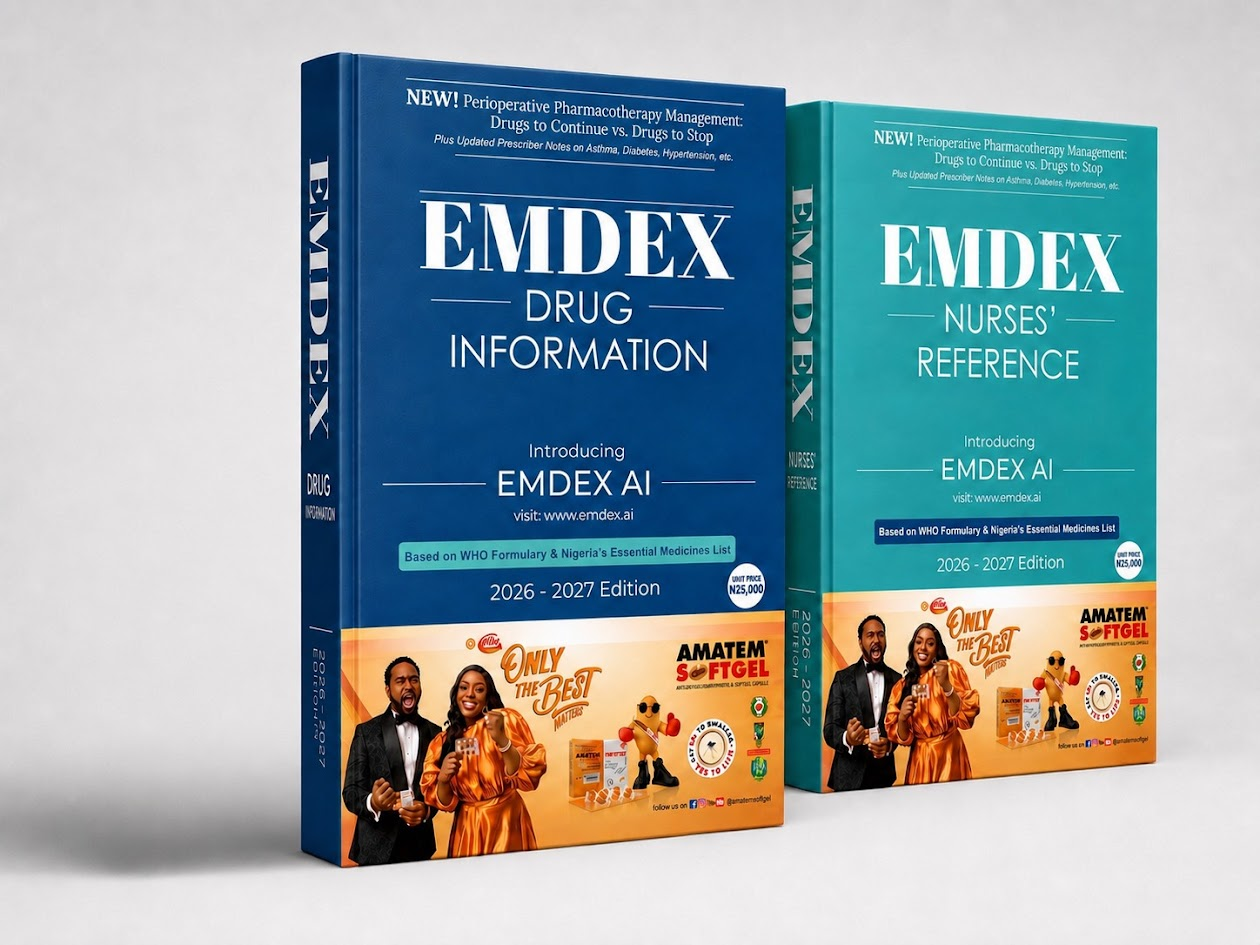
Introducing EMDEX AI

EMDEX AI

Nigeria’s First AI-Powered Drug Information Assistant Web App

EMDEX AI combines trusted and authoritative drug information with conversational search powered by generative AI to help healthcare professionals make faster, safer, and evidence-based drug therapy decisions.

🔎 Clinical queries are answered using Nigeria-specific drug data
📚 Supported by relevant international guidelines with cited references
👤 Includes patient-specific therapeutic considerations

The platform provides direct access to:

  • Nigeria’s medicines database
  • National clinical guidelines (STG, Malaria, Hypertension, Diabetes, TB, etc.)
  • Global drug‑therapy resources (PubMed Evidence, NICE, WHO, NCCN, and more)
  • Current Medical News & Practice Updates
  • A fully searchable medicines database

Built for:
Physicians • Pharmacists • Nurses • Allied Health Professionals

This is more than search.
This is intelligent clinical referencing — built for Nigerian practice.

Try it today:
🌐 www.emdex.ai
📝 Sign up: www.web.emdex.ai

Counterfeit Drugs and Recalled Drugs: All you need to know to keep your patients safe

Counterfeit Drugs and Recalled Drugs: All you need to know to keep your patients safe

Background

In 2022, the Nigerian market – known as one the largest producing country of counterfeit medicines – was reported to have a prevalence rate of counterfeit drugs in circulation, higher than the global average of 10% and this contributes to a significant number of deaths recorded in the country annually. According to NAFDAC (National Agency for Food and Drug Administration and Control), some of the drugs most counterfeited are antibiotics, analgesics and antimalarials.

What are Counterfeit Drugs and Recalled Drugs

Drugs – also known as medicines or medications – are ideally produced as chemical and physiological substances to treat illnesses or relieve symptoms. However, Counterfeit Drugs – interchangeably referred to as Fake, Falsified or Substandard drugs – are medicines with low or wrong concentration of active ingredients, in some cases with no active ingredients at all; deliberately packaged, fraudulently mislabelled, and marketed in a deceptive manner with respect to its identity or source.

According to the World Health Organisation (WHO), these drugs usually do not meet regulatory standards and approvals, as they are unregistered and unlicensed products that have not undergone or failed the evaluation process and/or approval by the National or Regional Regulatory Authority for the market in which they are marketed, distributed or used.

On the other hand, Recalled Drugs are the original products from the original manufacturer of the drug. However, the medicine was found to have one issue or the other that makes it unfit or unsafe for consumption. These drugs are usually voluntarily announced and recalled by the producers. Some of the recorded reasons for recall are labelling mix-up, unsafe substance or ingredient in the drug, contamination of content from production to packaging and so on.

Several Counterfeit and Recalled Drugs have been withdrawn from the market and circulation to the public, largely to ensure the safety of the consumers. In 2022, well over 50 drugs – inclusive of oral liquids, capsules, supplements, tablets, gels, sprays and various parenteral products – were announced for recall by the Food and Drug Administration (FDA). In Nigeria, some of the recent alerts by NAFDAC on counterfeit and substandard drugs in circulation include

  • Meronem brand of Meropenem 1g IV injection & 625mg Augmentin Tablets (both antibiotics);
  • Different brands of 0.5mg oral Dexamethasone & topical Neo Medrol (both glucocorticosteroidal drugs);
  • 5 mg tablet Daonil & 100 I.U Lantus Solostar Solution for Injection in Prefilled Pens (both anti-diabetics);
  • Promethazine Oral Solution, Kofexmalin Baby Cough Syrup, Makoff Baby Cough Syrup & Magrip N Cold Syrup (all four are substandard and contaminated cough syrups).

An analgesic product exposed via social media was the P-500 brand of paracetamol and efforts were made by the regulatory agency to ensure these drugs were moped up from circulation.

Effects of Counterfeit or Substandard drugs

Circulation of fake medicines is a life-threatening issue of global health concern as it accounts for the death of over 100,000 people yearly in Africa alone. Also, these counterfeit drugs easily reach 3 in every 10 medicines users, and the market worth of these fake drugs is well over 200 billion USD.

Consumption of these substandard or fake medicines can cause adverse reactions, as well as continued or worsening symptoms and progression of illness, leading to complication and sometimes, death.

Also, this significantly harms our health care system, as people lose trust in the system and its healthcare workers, because the medication prescribed or dispensed to them are not having the expected or required effects. Furthermore, the cheaper cost and wide spread of falsified medicines, as opposed to its authentic counterparts, causes a remarkable loss of the capital invested in manufacturing and distributing the genuine drugs by impeding its sales and profit. Hence, leading to a cumulative loss and discouragement for the companies producing the original health and life-saving products.

How to easily spot or identify falsified drugs

Some of the features to look out for on drugs before purchasing and consuming them are

  • Wrong spellings and/or mimicry of original drug names; this could be in form of misarrangement of alphabets, wrong colour codes, logos and text appearance.
  • Identification and registration parameters such as NAFDAC registration number, batch number, the manufacturer address, expiry and manufacture dates; every original drug should have these set of information.
  • Unique authentication codes or scratch pins not returning authenticity or confirmation messages; this could also be a giveaway that the drug is fake.

Battle against drug falsification: recommended action for all

Everyone – including Patients, Pharmacists, Patent drug sellers, Doctors, Nurses, Health facility management, Regulatory bodies, Policy makers and other stakeholders – have a role to play in eradicating counterfeit and substandard drugs. Some of our recommendations include

  • purchase and distribution of drugs via secured and qualified sources of original medicines only,
  • embracing the innovation of technology and mobile services to curb this menace,
  • improving the quality assurance operations among drug manufacturers nationwide,
  • effective pharmacovigilance by experts and involved stakeholders,
  • enforcing the National Drug Control Bill,
  • continuous enlightenment of the general public to avoid cheaply peddled medicines, and
  • education about counterfeit drugs and its devastating effects.

References:

  1. Recalls, Market Withdrawals, & Safety Alerts | FDA
  2. Nigerian startups help fight scourge of fake medicines | Reuters
  3. ‘Hundreds of thousands’ killed by counterfeit medicine in Africa | Health News | Al Jazeera
  4. Medsaf is the Healthtech Startup Tackling Counterfeit Drugs in Nigeria – Technext
  5. Counterfeit drugs in Nigeria and how they can be outlawed (sunnewsonline.com)
  6. Toxic tablets, counterfeit pills (I): Killer drugs that damage Nigerians’ health | The ICIR (icirnigeria.org)
  7. Public Alert No:044/2022 – Counterfeit Neo Medrol found in Circulation in Nigeria – NAFDAC
  8. Press Briefing On The Substandard (Contaminated) Paediatric Cough Syrups Circulating In Gambia – NAFDAC
  9. Public Alert No. 046/2022 – Alert on the Distribution and Sale of Falsified Daonil 5mg Tablets – NAFDAC
  10. Public Alert No. 047/2022 – Alert On The Distribution And Sale Of Falsified Lantus Solostar Solution For Injection In Prefilled Pens 100 I.U – NAFDAC
  11. Public Alert No. 041/2022 – Recall of substandard dexamethasone products detected in Anambra State, Nigeria – NAFDAC
  12. Public Alert No: 42 – NAFDAC Alert And Sensitization Of The Public On Suspected Falsified Augmentin 625mg – NAFDAC

NAFDAC directs immediate cessation of sale and distribution of all ranitidine containing products until further notice

NAFDAC Nigeria: Latest Drug Product Recalls & Safety Alerts

[NAFDAC Public Alert, October 5, 2019] – The National Agency for Food and Drug Administration and Control (NAFDAC) has directed distributors, wholesalers and retail pharmacies in possession of stock of ranitidine containing products to immediately stop distribution and sale of the products. This follows findings of low levels of N-Nitrosodimethylamine (N-NDMA), a genotoxic impurity, in Zantac injection (50 mg/5 mL Batch No. 669) by Swissmedic, the National Medicines Regulatory Authority of Switzerland.

Genotoxic substances such as N-NDMA are known to be potentially carcinogenic when ingested, inhaled or penetrate the skin. The US FDA and other National Medicines Regulatory Authorities have taken similar steps in recalling and suspending further sale and distribution of ranitidine containing products.

The Marketing Authorization Holder (MAH) of Zantac in Nigeria, Glaxo SmithKline (GSK) has confirmed to the Agency that Zantac is no longer imported into Nigeria. The last batch of Zantac that was imported into Nigeria expired in November 2018.

NAFDAC implores all Pharmaceutical importers to stop importation of all ranitidine containing products until further notice.

NAFDAC has strengthened surveillance at ports of entry to prevent importation of ranitidine containing products until further notice.

Patients on ranitidine containing products are to contact their Healthcare Provider to advise them on alternative treatment.

Healthcare professionals and patients are advised to be vigilant and report any information on importation and distribution of ranitidine containing products to the nearest NAFDAC office, NAFDAC PRASCOR (20543 TOLL FREE from all networks) or via pharmacovigilance@nafdac.gov.ng

Source: NAFDAC Public Alert No: 0017/2019, October 5, 2019

Eli Lilly’s Reyvow Gets FDA Approval for Acute Treatment of Migraine

[FDA News Release, October 12, 2019] – The U.S. Food and Drug Administration has approved Reyvow (lasmiditan) tablets for the acute (active but short-term) treatment of migraine with or without aura (a sensory phenomenon or visual disturbance) in adults. Reyvow is not indicated for the preventive treatment of migraine.

Lasmiditan is the first serotonin (5-HT) 1F receptor agonist for the acute treatment of migraine. Reyvow will be available in oral doses of 50 mg, 100 mg, and 200 mg tablets.

Migraine headache pain is often described as an intense throbbing or pulsing pain in one area of the head. Additional symptoms include nausea and/or vomiting and sensitivity to light and sound. Approximately one-third of individuals who suffer from migraine also experience aura shortly before the migraine. An aura can appear as flashing lights, zig-zag lines, or a temporary loss of vision. Migraines can often be triggered by various factors including stress, hormonal changes, bright or flashing lights, lack of food or sleep, and diet. Migraine is three times more common in women than in men and affects more than 10% of people worldwide.

The effectiveness of Reyvow for the acute treatment of migraine was demonstrated in two randomized, double-blind, placebo-controlled trials. A total of 3,177 adult patients with a history of migraine with and without aura treated a migraine attack with Reyvow in these studies. In both studies, the percentages of patients whose pain resolved and whose most bothersome migraine symptom (nausea, light sensitivity, or sound sensitivity) resolved two hours after treatment were significantly greater among patients receiving Reyvow at all doses compared to those receiving placebo. Although patients were allowed to take a rescue medication two hours after taking Reyvow, opioids, barbiturates, triptans and ergots were not allowed within 24 hours of the study drug’s administration. Twenty-two percent of patients were taking a preventive medication for migraine.

There is a risk of driving impairment while taking Reyvow. Patients are advised not to drive or operate machinery for at least eight hours after taking Reyvow, even if they feel well enough to do so. Patients who cannot follow this advice are advised not to take Reyvow. The drug causes central nervous system (CNS) depression, including dizziness and sedation. It should be used with caution if taken in combination with alcohol or other CNS depressants.

The most common side effects that patients in the clinical trials reported were dizziness, fatigue, a burning or prickling sensation in the skin (paresthesia), and sedation.

Source: FDA News Release, October 11, 2019

Therapeutic Analysis of Topical Corticosteroids & their Combination Products Available in Nigerian Market

There are several topical corticosteroid formulations (including combinations with anti-infectives) that are registered and approved for use in Nigeria. The TCS formulations are listed by their generic names only. Brand details and detailed therapeutic classifications can be found in EMDEX Print or Mobile.

Choosing topical corticosteroids (TCS)

Topical corticosteroids are widely used for a variety of inflammatory skin disorders. They suppress the inflammatory reaction and relieve symptoms, but their actions are not curative and symptoms can recur on discontinuation of therapy.

Safe and effective use of TCS requires careful consideration of the following:

  • Accurate diagnosis.
  • Choice of steroid preparation, relative potency and delivery vehicle.
  • Frequency of application and duration of treatment
  • Potential adverse effects, both local and systemic

Appropriate indications

Topical corticosteroids are generally indicated for symptomatic relief of acute and chronic skin eruptions, where anti-inflammatory, anti-allergenic and antipruritic activity is required.

Indications for TCS include contact dermatitis, eczema (atopic dermatitis), psoriasis, insect bites; symptomatic relief for burning and pruritic lesions, etc. See below for detailed listing of skin conditions that may be responsive to topical steroid therapy.

TCSs should be avoided in untreated tubercular, bacterial and fungal infections involving the skin and in certain viral diseases such as herpes simplex, chickenpox, and vaccinia due to concerns that immunosuppression may exacerbate the infection.

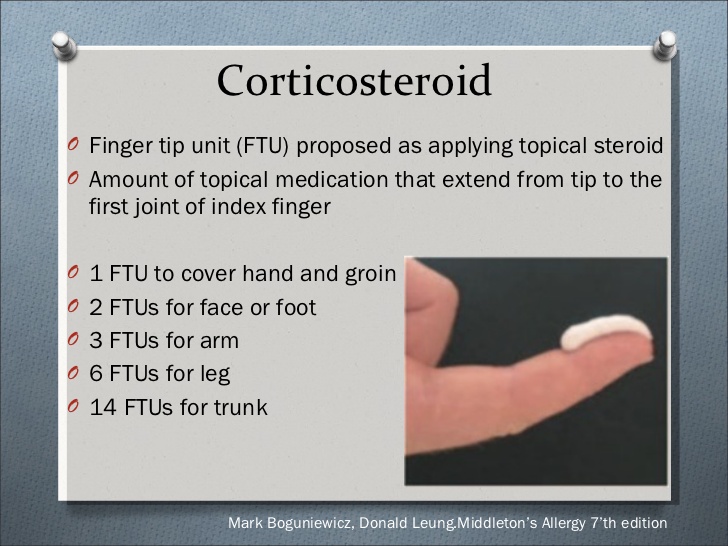
Dosing, frequency of application, and duration of treatment: “The Fingertip Unit Method”

A fingertip is from the very end of the finger to the first crease in the finger. The “Fingertip unit” (FTU) is a validated method of applying topical drugs in suitable safe quantities. One FTU is approximately 0.5 g, and is defined as the amount of topical steroid that can be squeezed out from a tube (with a stand-ard 5 mm nozzle) along an adult’s fingertip i.e., from the very end of the finger to the first crease of an adult’s index finger.

The frequency of application may vary with the product used and the condition being treated. Once or twice-daily application is recommended for most preparations. More frequent application is usually not needed, since the stratum corneum acts as a reservoir for these lipophilic compounds. An alter-nate day or even twice weekly application may be recommended in some chronic conditions due to this depot effect of TCS.

Duration of treatment for most conditions should not exceed 2-4 weeks, regardless of the potency of the TCS. Chronic application of topical steroids can induce tolerance and tachyphylaxis. High-potency steroids should not be used for more than three weeks continuously. If there is worsening of the le-sions or no change noticed, the product needs to be discontinued and re-evaluation of the diagnosis is indicated.

Selecting a vehicle

Topical corticosteroid preparations consist of an active ingredient and a vehicle (or solvent). In addition to being a carrier for the corticosteroid, the vehicle affects potency based on alterations of the steroid release rate and bioavailability.

The selection of vehicle depends on the type of lesions and the anatomical region. Some vehicles should be used only in certain parts of the body. Most topical corticosteroid preparations are available in several forms, including ointments, creams, gels, aerosols and lotions.

Ointments usually contain petrolatum, waxes, paraffin, propylene glycol, or mineral oil.

Preferred vehicle for Palm and Soles; nonhairy skin and also for dry or thick, hyperkeratotic lesions.

Most occlusive, provides better steroid absorption/penetration. Atopic skin conditions due to hydrating nature. Not suitable for hairy and intertriginous areas

Creams (oil-in-water emulsions) have good lubricating qualities and their ability to vanish into the skin make them cosmetically appealing.

May be used in any area of the body. Preferred vehicle for wet or weepy (exudative) lesions due to their drying effect; also for between skin folds.

Good lubricating and vanishing property, and cosmetic appeal. Generally, less potent than ointments. Suitable for use in intertriginous areas unlike ointments

Gels and lotions are the least greasy and occlusive of all topical steroid vehicles.

Gels may be used on the scalp and other hairy skin areas due to their drying & cooling qualities. Jelly-like effect makes it suitable for exudative inflammation (e.g., poison ivy) and for acne. Non-greasy and non-occlusive.

Lotions/Solutions contain alcohol, which has a drying effect on an oozing (weeping) lesion.

Preferred vehicles for the scalp and other hairy skin areas; between skin folds; moist, macerated lesions.

Easy to apply. Non-greasy and non-occlusive. Least potent topical therapies. Drying and cooling effects.

Topical corticosteroids, Combinations with antibacterials and/or antifungals

TCS combination with an anti-infective agent is indicated where the risk of infection is high or where there is an expectation that potentially dangerous numbers of bacteria or fungi will be present on the skin. The use of these combination products should be limited as some of the components can be sensitizing (e.g., Neomycin). These formulations are generally overused and sometimes, for cosmetic reasons. They allow for treatment without proper diagnosis and should be discouraged.

Recommendations for optimizing the use of topical corticosteroids

  • Children generally require a shorter duration of treatment and a lower potency steroid.
  • Prescribe for the right dermatoses, not as empiric therapy for every “rash”.
  • Use appropriate steroid formulation and potency to achieve disease control.
  • Initiate maintenance therapy with a lower potency steroid after achieving control of the acute inflammation.
  • Taper off the treatment upon complete remission of skin diseases, after prolonged therapy.
  • Limit the duration of use
  • Caution when prescribing topical steroid for certain body regions (e.g., groin, face, axillae, and flexures).
  • To be aware of the adverse effects and act immediately to counteract them.
  • When infections necessitate the addition of an antibiotic or antifungal, systemic treatment should be considered.
  • When the diagnosis is unclear or the condition is nonresponsive to standard treatment, refer to a dermatologist.

Comparison of topical corticosteroids

Ultra-high and High Potency TCS

Recommended for thick skin areas like Palm and Soles for: Atopic dermatitis (resistant); Discoid lupus; Hyperkeratotic eczema; Lichen planus; Lichen sclerosus (skin); Psoriasis; Severe hand eczema.

High-potency may also be used on the Trunk, Extremities, Scalp & Hairy skin areas for: Scalp dermatitis; Atopic dermatitis; Psoriasis, etc.

They pose the highest risk of systemic side effects. Avoid abrupt discontinuation; continuous daily use >3 weeks, and occlusive dressings.

Monitor for symptoms of adrenal suppression: weakness, weight loss, hypotension, and gastrointestinal distress.

Lower potency agents are preferred for the face, groin, armpits, or skin folds due to susceptibility to local side effects and systemic absorption

Ultra-high potency includes: Betamethasone dipropionate glycol (augmented) 0.05% Cream, Ointment, Lotion; Clobetasol 17-propionate 0.05% Cream, Ointment, Lotion; Halobetasol propionate 0.05% Ointment.

High potency includes: Amcinonide 0.1% Ointment, Cream, Lotion; Betamethasone dipropionate 0.05% Ointment, Cream, Lotion; Betamethasone valerate 0.1% Ointment; Fluocinonide 0.05% Cream, Ointment, Gel; Halobetasol propionate 0.05% Cream; Mometasone furoate 0.1% Ointment.

Moderate Potency TCS

Recommended for Trunk, Extremities, Scalp & Hairy skin areas for: Alopecia areata; Atopic dermatitis; Contact dermatitis (severe); Lichen sclerosus (vulva); Nummular eczema; Perianal inflammation (severe); Scabies (after scabicide); Seborrheic dermatitis; Severe dermatitis; Severe intertrigo (short-term); Stasis dermatitis.

Moderate to low potency agents should be used when treatment involves large body surface area.

Duration of treatment: May be used for up to 3 months when treating non-facial or non-intertriginous areas.

Occlusive dressings should be avoided.

Low Potency TCS

Recommended for thin skin areas like Face, Neck, Intertriginous or Genital areas for: Dermatitis (face, eyelids, diaper region); Intertrigo; Perianal inflammation.

These are agents of choice for children, pregnant women, elderly or for treating large areas.

Available TCS Combinations with Antibiotics

  • Betamethasone + Neomycin (Topical)
  • Hydrocortisone + Gentamicin (Topical)
  • Hydrocortisone + Neomycin (Topical)

Available TCS Combinations with Antifungals

  • Beclometasone + Clotrimazole
  • Betamethasone + Clotrimazole
  • Clobetasol + Clotrimazole
  • Dexamethasone + Clotrimazole
  • Diflucortolone + Isoconazole
  • Hydrocortisone + Miconazole (Topical)

Available TCS Combinations with Antibiotics and Antifungals

  • Beclometasone + Clotrimazole + Gentamicin
  • Beclometasone + Clotrimazole + Gentamicin + Clioquinol
  • Betamethasone + Clotrimazole + Gentamicin
  • Betamethasone + Clotrimazole + Neomycin
  • Betamethasone + Tolnaftate + Gentamicin
  • Betamethasone + Tolnaftate + Gentamicin + Clioquinol
  • Betamethasone + Tolnaftate + Neomycin + Clioquinol
  • Clobetasol + Ketoconazole + Neomycin
  • Clobetasol + Miconazole + Gentamicin
  • Clobetasone + Miconazole + Gentamicin
  • Dexamethasone + Clotrimazole + Gentamicin
  • Dexamethasone + Clotrimazole + Neomycin
  • Dexamethasone + Miconazole + Neomycin
  • Fluocinolone + Miconazole + Neomycin
  • Miconazole + Beclometasone + Neomycin
  • Miconazole + Clobetasol + Neomycin
  • Triamcinolone + Econazole + Gentamicin

Adverse effects of topical corticosteroids (TCS)

Risk factors for adverse effects

  • Duration of treatment — long-term treatment is likely to result in systemic absorption.
  • Area of the skin being treated — treating large areas of skin increases the risk of absorption.
  • Condition of the skin — absorption is greatest in thin, inflamed skin.
  • Potency of the topical corticosteroid — the greater the potency, the greater the risk of absorption.
  • Occlusion — use of topical corticosteroids under occlusion increases the risk of systemic absorption.
  • Age — children and elderly people are more susceptible to the adverse effects of topical corticosteroids because they have a thinner epidermis.

Local adverse effects

Common and mostly occur on the face, in skin folds, and in areas that are treated over the long term

  • Transient burning or stinging — this is common, especially in the first 2 days of application on untreated, inflamed skin.
  • Worsening and spreading of untreated infection.
  • Thinning of the skin (atrophy) — the skin improves over a period after stopping treatment.
  • Permanent stretch marks or striae. Most common in the groin, axillae, and inner thigh areas.
  • Allergic contact dermatitis — due to the corticosteroid or the excipients. Lower potency agents like Hydrocortisone may be more allergenic.
  • Acne (or worsening of existing acne) or rosacea. Common in the face with high potency agents.
  • Hypopigmentation — More common in the blacks. May be reversible.
  • Excessive hair growth at the site of application (hypertrichosis). Reversible.

Systemic adverse effects

Rare, but may occur more frequently in the presence of risk factors including infants and children

  • Adrenal suppression.
  • Cushing’s syndrome.
  • Hyperglycaemia
  • Growth retardation in children.

Minimizing adverse effects

  • Prescribe the least potent formulation which is fully effective (advise the person to apply it thinly to affected areas, no more than twice daily).
  • Consider prescribing an appropriate quantity of an emollient for use alongside the topical corticosteroid (for moisturizing purposes).
  • Avoid prescribing potent corticosteroids for use on the face.
  • Unless under specialist supervision, the use of potent (such as betamethasone valerate 0.1%) and very potent (such as clobetasol propionate 0.1%) topical corticosteroids, should be limited to: Use for up to 2 weeks, and No more than 50 g each week; Once–daily application is usually sufficient — maximum of twice daily.
  • Avoid using occlusive dressings with topical corticosteroids (especially on large areas of the body).
  • If a topical corticosteroid is needed for maintenance therapy, consider incorporating regular periods when they are withdrawn (for as long as possible) and emollients are used on their own.
  • If the person is using large amounts of topical corticosteroid regularly, monitor them for signs of systemic adverse effects (such as adrenal suppression) and local adverse effects (such as areas of thin skin or striae).
  • Monitor the height of children who are using large amounts of topical corticosteroid.

References

Available on request
Young Children With Sleep Apnea May Face Learning Difficulties: Study

– Sleep apnea in young children may affect youngsters’ attention, memory and language development, a new study suggests.

The researchers added that as sleep apnea worsens, the risk of these problems also may increase.

“Although evidence suggesting the presence of cognitive deficits in children with sleep apnea has been around for quite some time, the relatively small groups studied made it difficult to demonstrate a strong relationship between increasing cognitive issues and increasing sleep apnea severity,” said Dr. Leila Gozal, from the University of Chicago.

Sleep apnea causes people to experience repetitive pauses in breathing while they sleep. This causes oxygen levels to drop temporarily, according to the U.S. National Heart, Lung, and Blood Institute.

While the new study with children did not prove cause-and-effect, previous research has shown that sleep apnea in adults is associated with trouble concentrating, memory issues, poor decision-making, depression and stress.

The new study involved almost 1,400 public schoolchildren with sleep apnea. The kids ranged in age from 5 to 7. Some, but not all, of the children snored.

The researchers divided the children into four groups based on the severity of their sleep apnea.

The kids participated in an overnight sleep study and answered detailed questions about their sleep. The children also completed tests to measure certain aspects of brain function, including language and decision-making skills.

After comparing the results in each group, the researchers found that even mild problems such as snoring had a negative effect on children’s thinking abilities, the researchers reported in a news release from the American Thoracic Society.

Gozal said the findings suggest that the development of simple brain function tests that could be used along with current clinical evaluation of children with habitual snoring might help guide the treatment of children with sleep apnea.

Zika Destroys Fetal Brain Cells, Lab Study Finds

The terrible birth defects caused by Zika virus appear to be the result of an immune system response that triggers prenatal brain cell suicide and obstructs fetal brain development, a new lab study reports.

The virus apparently activates an immune receptor called TLR3, which the body uses to identify and defend against invading viruses, said lead researcher Tariq Rana. He is a professor of pediatrics and genetics at the University of California, San Diego.

The hyper-activated TLR3 then proceeds to turn off genes that fetal stem cells need to specialize into brain cells, and appears to switch on genes that trigger cell suicide, Rana said.

“We all have an innate immune system that evolved specifically to fight off viruses, but here the virus turns that very same defense mechanism against us,” Rana explained. “By activating TLR3, the Zika virus blocks genes that tell stem cells to develop into the various parts of the brain.”

These findings help explain how Zika causes microcephaly, an abnormally small brain and skull development, and other neonatal brain-related birth defects, Rana said. They also show why there’s no similar effect in adults, since their brains are already fully developed.

There’s also good news for the potential prevention of brain birth defects due to Zika. Rana and his team successfully blocked this process in laboratory stem cell samples by using a chemical that inhibits the action of TLR3.

A drug that safely blocks TLR3 could possibly save babies from birth defects if given to Zika-infected women during the early stages of pregnancy, he said.

“If some mom comes into the clinic and the doctor thinks there is a Zika infection established, you could give this med, and once the first trimester is done, you can take them off the med,” Rana suggested.

Zika is the first mosquito-borne virus ever proven to cause birth defects, according to the U.S. Centers for Disease Control and Prevention.

To figure out why this happens, Rana and his team used human embryonic stem cells to create a laboratory model of a first-trimester human brain, also called a “cerebral organoid.” The model’s stem cells were designed to specialize and grow into the various different cells in the brain, much the same as they do during a fetus’ first trimester.

Researchers then infected their model with Zika and found that a developing brain shrinks when exposed to the virus.

Five days after infection, Zika-infected organoids had decreased in size by an average 16 percent, the researchers found. By comparison, healthy brain organoids in a control sample had grown an average of 22.6 percent.

Rana’s team noticed that the TLR3 gene had been activated in the Zika-infected model brains.

TLR3’s job is to sense viruses and activate an immune response. But the researchers found TLR3 activation influenced 41 genes in the fetal brain and caused a disastrous chain-reaction that both prompted cells to die off and interfered with stem cells’ ability to grow into different brain cells.

By adding a chemical TLR3 inhibitor, Rana’s team found they could partially protect developing brain cells against Zika, although the virus still wound up doing some damage to their model brain.

Rana said this research has only been conducted in human and mouse cells, and needs to be replicated in actual organisms before it can be used to create any therapy to counter Zika.

But infectious disease expert Dr. Amesh Adalja called the work an “elegant study that begins to unravel how Zika is capable of causing microcephaly in the developing fetus.”

Adalja, a senior associate with the University of Pittsburgh Medical Center’s Center for Health Security, said, “We had known prior to this study that Zika had the capacity to infect neural progenitor cells and cause damage.”

With this study, he added, “we now have an elucidation of one mechanism that the virus uses, TLR3. This discovery opens up avenues for further understanding of the entire cascade of changes in gene expression that are caused by Zika infection.”

In Obese Kids, Reflux Symptoms May Be Mistaken for Asthma

NEW YORK (Reuters Health) – Obese youngsters and their doctors may be incorrectly attributing gastroesophageal reflux symptoms to asthma, researchers say.

In their pediatric asthma cohort, reflux symptoms were seven times more common in obese kids than in lean kids.

Writing online February 1 in Thorax, the researchers urge that especially for obese patients, “questionnaires that query symptoms that are more specific to asthma (‘whistling in the chest’) may improve the accuracy of symptom monitoring,” and newer portable spirometers for home use might also improve management.

Helping patients distinguish gastroesophageal reflux disease (GERD) from true lower airway symptoms will reduce medication overuse and side effects, unnecessary escalation of controller drugs and unnecessary usage for asthma, Dr. Jason E. Lang of Nemours Children’s Hospital in Orlando, Florida and colleagues say.

In previous research, Dr. Lang’s group had found that while obese and lean children with asthma had similar lung function, the obese kids were more likely to self-medicate with short-acting beta-agonists.

Of the 56 children in this new study, 23 were obese, 12 were overweight, and 21 were lean. All were between the ages of 10 and 17 and recruited between 2008 and 2010.

Symptoms and quality of life were assessed with validated tools, including the modified Asthma Control Questionnaire (ACQ6), the Asthma Control Test, the Pediatric Asthma Quality of Life Questionnaire, and the Pediatric Caregiver’s Asthma Quality of Life Questionnaire. Patients were also evaluated with the GERD Symptom Assessment Questionnaire (GSAQ), lung spirometry, FENO maneuvers, and a methacholine challenge.

The research team also attempted to replicate the GERD and asthma quality of life questionnaire results in a separate cohort of 306 children with severe asthma and no previous reflux disease.

The odds of reporting several GERD symptoms were more than seven times greater in the obese group (OR=7.7, p for interaction=0.004).

Asthma symptoms were tied to GERD scores in obese children (r=0.815, p<0.0001) but not in lean children (r=0.291, p=0.200; p for interaction=0.003). Objective tests linked higher GERD scores to higher FEV1-percent predicted (p=0.003), lower airway resistance (R10, p=0.025), improved airway reactance, (X10, p=0.005), but far worse asthma control as recorded on the Asthma Control Questionnaire (p=0.007).

In an interview, Dr. Lang suggested to Reuters Health that the symptom misattribution may be an effect of the “short doctor-patient visit.” He explained: “The underlying message for doctors and nurses is that we need to ask about specific asthma and specific reflux symptoms. We need to not jump to conclusions and thoroughly assess symptoms.”

Dr. Deepa Rastogi, a pediatric pulmonologist at the Children’s Hospital of Montefiore and the Albert Einstein College of Medicine, Bronx, New York told Reuters Health in an interview, “This is a very well-conducted study with outcomes of interest to all of us. It really shows us that it is worthwhile to look for disease entities other than asthma.”

She added, “Using objective measures and patient self report, we may do better at treatment.”

Is there a place for proton pump inhibitors if GERD underlies the asthma-like symptoms?

“Once we all realize that misattribution can be a problem, we can focus more carefully on making the right diagnosis of the symptoms and can employ other confirmatory testing like using spirometry or response to albuterol (rescue inhalers),” Dr. Lang said. “If the child truly has GER that is causing pain and discomfort, the GER should absolutely be evaluated and a discussion needs to occur weighing the risks and benefits of GER medicines.”

He continued, “Some patients who learn their chest symptoms are likely from GER and it’s not causing too many problems may elect to not treat and adopt proven lifestyle interventions. On the other hand, if GER are more bothersome or leading to coughing, then lifestyle changes plus intermittent use of an anti-GER may be the right choice. I am concerned about the side-effects of long-term use of PPIs since which we have shown that PPI appears to worsen asthma control in patients who are slow metabolizers of the drug.”

Are You at Risk for Metabolic Syndrome?

Metabolic syndrome, sometimes called pre-diabetes, is a group of risk factors that increase your risk of heart disease.

The National Heart, Lung, and Blood Institute says metabolic syndrome includes:

  • Having excess abdominal fat, which increases the circumference of your waist.
  • Having high levels of fatty triglycerides in the blood.
  • Having low levels of HDL (“good”) cholesterol.
  • Having high blood pressure.
  • Having a high fasting blood sugar.


Taking antidepressants during pregnancy increases risk of autism by 87%

antidepresseurs-ts-303Using antidepressants during pregnancy greatly increases the risk of autism, Professor Anick Bérard of the University of Montreal and its affiliated CHU Sainte-Justine children’s hospital revealed today. Prof. Bérard, an internationally renowned expert in the fields of pharmaceutical safety during pregnancy, came to her conclusions after reviewing data covering 145,456 pregnancies. “The variety of causes of autism remain unclear, but studies have shown that both genetics and environment can play a role,” she explained. “Our study has established that taking antidepressants during the second or third trimester of pregnancy almost doubles the risk that the child will be diagnosed with autism by age 7, especially if the mother takes selective serotonin reuptake inhibitors, often known by its acronym SSRIs.” Her findings were published today in JAMA Pediatrics.

Bérard and her colleagues worked with data from the Quebec Pregnancy Cohort and studied 145,456 children between the time of their conception up to age ten. In addition to information about the mother’s use of antidepressants and the child’s eventual diagnosis of autism, the data included a wealth of details that enabled the team to tease out the specific impact of the antidepressant drugs. For example, some people are genetically predisposed to autism (i.e., a family history of it.) Maternal age, and depression are known to be associated with the development of autism, as are certain socio-economic factors such as being exposed to poverty, and the team was able to take all of these into consideration. “We defined exposure to antidepressants as the mother having had one or more prescription for antidepressants filled during the second or third trimester of the pregnancy. This period was chosen as the infant’s critical brain development occurs during this time,” Prof. Bérard said. “Amongst all the children in the study, we then identified which children had been diagnosed with a form of autism by looking at hospital records indicating diagnosed childhood autism, atypical autism, Asperger’s syndrome, or a pervasive developmental disorder. Finally, we looked for a statistical association between the two groups, and found a very significant one: an 87% increased risk.” The results remained unchanged when only considering children who had been diagnosed by specialists such as psychiatrists and neurologists.

Anick Bérard. Credit : Amélie Philibert.

Anick Bérard. Credit : Amélie Philibert.

The findings are hugely important as six to ten percent of pregnant women are currently being treated for depression with antidepressants. In the current study, 1,054 children were diagnosed with autism (0.72% of the children in the study), on average at 4.5 years of age. Moreover, the prevalence of autism amongst children has increased from 4 in 10,000 children in 1966 to 100 in 10,000 today. While that increase can be attributed to both better detection and widening criteria for diagnosis, researchers believe that environmental factors are also playing a part. “It is biologically plausible that anti-depressants are causing autism if used at the time of brain development in the womb, as serotonin is involved in numerous pre- and postnatal developmental processes, including cell division, the migration of neuros, cell differentiation and synaptogenesis – the creation of links between brain cells,” Prof. Bérard explained. “Some classes of anti-depressants work by inhibiting serotonin (SSRIs and some other antidepressant classes), which will have a negative impact on the ability of the brain to fully develop and adapt in-utero”

The World Health Organization indicates that depression will be the second leading cause of death by 2020, which leads the researchers to believe that antidepressants will likely to remain widely prescribed, including during pregnancy. “Our work contributes to a better understanding of the long-term neurodevelopmental effects of anti-depressants on children when they are used during gestation. Uncovering the outcomes of these drugs is a public health priority, given their widespread use,” Prof. Bérard said.

About this study

Takoua Boukhris, Odile Sheehy, Laurent Mottron, MD, PhD, and Anick Bérard, PhD, published “Antidepressant use during pregnancy and the risk of autism spectrum disorder in children” in JAMA Pediatrics on December 14, 2015. DOI: 10.1001/jamapediatrics.2015.3356.

Anick Bérard, PhD, is a professor at the University of Montreal’s Faculty of Pharmacy and a researcher at the CHU Sainte-Justine Research Centre.

This study was supported by the Canadian Institutes of Health Reseach (CIHR) “Quebec Training Network in Perinatal Research”, and the Fonds de la recherche du Québec – Santé (FRQ-S).,

Dr. Bérard is the recipient of a FRQ-S research Chair on Medications and Pregnancy. Dr Bérard is a consultant for plaintiffs in litigations involving antidepressants and birth defects.