Febuxostat: Boxed Warning Added – Due to Increased Risk of Death with Gout Medicine

FDA strengthens warning that untreated constipation caused by clozapine can lead to serious bowel problems

US Food & Drug Administration (FDA) has concluded there is an increased risk of death with Febuxostat compared to another gout medicine, Allopurinol. This conclusion is based on our in-depth review of results from a safety clinical trial that found an increased risk of heart-related death and death from all causes with Febuxostat.

FDA recommends that Febuxostat should be reserved for use only in patients who have failed or do not tolerate allopurinol. Counsel patients about the cardiovascular risk with Febuxostat and advise them to seek medical attention immediately if they experience any of the following symptoms:

  • Chest pain
  • Shortness of breath
  • Rapid or irregular heartbeat
  • Numbness or weakness on one side of your body
  • Dizziness
  • Trouble talking
  • Sudden severe headache

Febuxostat monograph in EMDEX has been updated to reflect this important safety information. See Febuxostat (under Pharmacovigilance).

Source: FDA Drug Safety Communication, February 21, 2019

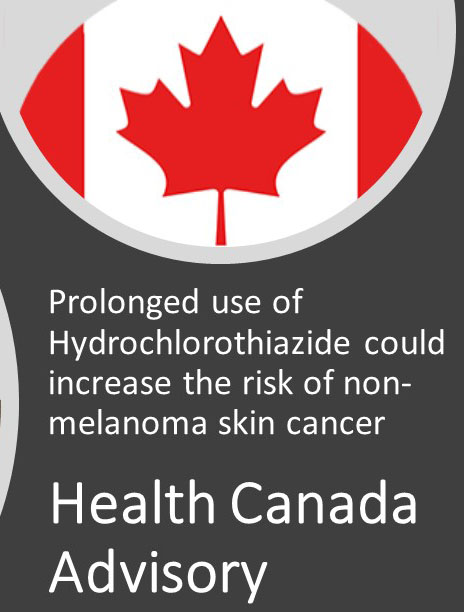
Prolonged use of hydrochlorothiazide may be associated with a risk of non-melanoma skin cancer

Prolonged use of hydrochlorothiazide may be associated with a risk of non-melanoma skin cancer

Health Canada (January 31, 2019) – Health Canada has completed a safety review of hydrochlorothiazide and has found that prolonged use of the drug could increase a person’s risk for non-melanoma skin cancer.

Hydrochlorothiazide is a prescription drug used to treat high blood pressure and swelling. It is known to make skin more sensitive to ultraviolet radiation and sunlight, meaning patients can get sunburned more easily.

Health Canada reviewed the best available evidence on the issue. Findings suggest an increased risk of non-melanoma skin cancer for patients who have used hydrochlorothiazide for more than three years. However, it is important to note that the studies reviewed had significant limitations. For example, there was a lack of patient data on sun exposure and severity, and duration of high blood pressure. Such data could help clarify the cause of the increased risk.

In light of these findings, Health Canada has concluded that prolonged use of hydrochlorothiazide may be associated with a risk of non-melanoma skin cancer that is at least four times the risk of not using hydrochlorothiazide.

Because of the seriousness of this risk and the wide use of this drug, Health Canada is taking a precautionary approach and is working with manufacturers to update the Canadian product safety information to reflect this new risk.

Important safety information for patients:

  • Talk to your healthcare provider or pharmacist if you are using hydrochlorothiazide and have any concerns regarding your risk for non-melanoma skin cancer.
  • Inform your healthcare provider if you identify any new skin lesions, such as moles or changes to existing skin lesions.
  • Limit your exposure to sunlight and avoid using tanning equipment as it can increase the risk of non-melanoma skin cancer. Use adequate protection when exposed to sunlight (e.g., sunscreen with SPF 30 or higher, clothing, and a hat).
  • Talk to your healthcare provider if you think that you may be at a particularly higher risk for non-melanoma skin cancer (e.g., if you have light-coloured skin, if you have a personal or family history of skin cancer, or if you are receiving ongoing immunosuppressive therapy).

Important information for healthcare providers:

  • Research findings suggest an increased risk of non-melanoma skin cancer with prolonged use of hydrochlorothiazide. However, because of important limitations in the studies, substantial uncertainty remains regarding these findings.
  • Patients taking hydrochlorothiazide should be informed of the risk of non-melanoma skin cancer. They should be advised to regularly check their skin for new lesions or changes to existing ones, and to report any suspicious skin lesions to their healthcare provider.
  • Patients taking hydrochlorothiazide should be advised to limit exposure to sunlight, avoid using tanning equipment, and use adequate protection (e.g., sunscreen with SPF 30 or higher, clothing, and hat) when exposed to sunlight to minimize the risk of non-melanoma skin cancer.
  • Alternatives to hydrochlorothiazide may be considered for patients who are at particularly higher risk for non-melanoma skin cancer (e.g., patients who have light-coloured skin, who have a personal or family history of skin cancer, or who are receiving ongoing immunosuppressive therapy).

Source: https://healthycanadians.gc.ca/recall-alert-rappel-avis/hc-sc/2019/68976a-eng.php

Choice of add-on therapy for diabetes management in low-resource settings: A summary of 2018 WHO recommendations

Management of type 2 diabetes during Ramadan

In 2013, the WHO-PEN (Package of Essential NCD Interventions) guidelines for managing type 2 diabetes in low-resource settings included diet, physical activity and metformin as first-line treatment; sulfonylurea as second-line treatment (or first-line treatment if metformin is contraindicated); and insulin as third-line treatment.

The newly released 2018 guidelines for diabetes treatment intensification in non-pregnant adults with diabetes mellitus has two main takeaways:

  • The newer oral hypoglycaemic agents were not found to be superior to metformin and sulfonylurea. These agents include dipeptidyl peptidase-4 inhibitors (DPP-4 inhibitors), sodium-glucose co-transporter 2 inhibitors (SGLT-2 inhibitors) and thiazolidinediones (TZDs). The guidelines consider their use as second- and third-line treatment for hyperglycaemia in type 2 diabetes.
  • Lack of evidence of the better effectiveness of insulin analogues vs human insulin. Human insulin has a better resource-use profile and is the preferred insulin for adults with type 1 diabetes and in adults with type 2 diabetes for whom insulin is indicated

Key recommendations in the updated 2018 guidelines

Recommendation #1: Give a sulfonylurea* to patients with type 2 diabetes who do not achieve glycaemic control** with metformin alone or who have contraindications to metformin (strong recommendation, moderate-quality evidence).

Remarks

*Glibenclamide should be avoided in patients aged 60 years and older. Sulfonylureas with a better safety record for hypoglycaemia (e.g. gliclazide) are preferred in patients for whom hypoglycaemia is a concern (people who are at risk of falls, people who have impaired awareness of hypoglycaemia, people who live alone, people who drive or operate machinery as part of their job).

**The WHO PEN protocol recommends a target fasting blood glucose of <7 mmol/L (126 mg/dl). However, an individualized approach is encouraged in setting the patient’s target level for glycaemic control, taking into account their comorbidities, risks from medication side-effects and their likely benefit from tight glycaemic control in view of life expectancy.

Recommendation #2: Introduce human insulin treatment to patients with type 2 diabetes who do not achieve glycaemic control with metformin and/or sulfonylurea (strong recommendation, very low-quality evidence).

Recommendation #3: If insulin is unsuitable*, a DPP-4 inhibitor, SGLT-2 inhibitor or a TZD may be added (weak recommendation, very low-quality evidence).

Remark

*Insulin treatment could be unsuitable when circumstances make its use difficult (e.g. persons who live alone and are dependent on others to inject them with insulin).

Recommendation #4: Use human insulin to manage blood glucose in adults with type 1 diabetes, and in adults with type 2 diabetes for whom insulin is indicated (strong recommendation, low-quality evidence**).

Remarks

* Recommendation 4 covers both short-acting (regular human insulin (RHI) and intermediate-acting human insulin (NPH insulin).

**The recommendation is strong because evidence of the better effectiveness of insulin analogues is lacking and human insulin has a better resource-use profile.

Recommendation #5: Consider long-acting insulin analogues to manage blood glucose in adults with type 1 or type 2 diabetes who have frequent severe hypoglycaemia with human insulin (weak recommendation,* moderate-quality evidence for severe hypoglycaemia).

Remark

*Recommendation 5 is a weak recommendation reflecting the lack of, or very low-quality evidence for, any of the long-term outcomes such as chronic diabetes complications and mortality, and the considerably higher costs for long-acting insulin analogues compared to intermediate-acting human insulin.

The National Guideline for the prevention and control of diabetes in Nigeria is in the works. According to the Health Minister, the guideline will ensure standardized protocol for medical care and patient self-management education to prevent acute complication and reduce the risk of long-term complications among Nigerians living with the disease. It is expected to be completed in 2021.

The recommendations contained in the WHO-PEN guidelines are relevant to low-resource countries like Nigeria and can be adopted pending the completion of our national guidelines. Click here for the 2013 edition

The 2018 update is available here

New ‘40 Push-up CVD Risk Test’: Women, time to get your men on the floor!

New ‘40 Push-up CVD Risk Test’: Women, time to get your men on the floor!

Is there a link between push-up exercise capacity and future cardiovascular events in active adult men?

Cardiovascular disease (CVD) remains the leading cause of death worldwide. In addition to long-recognized risk factors for CVD, such as smoking, hypertension, and diabetes, the unfavourable health consequences of physical inactivity on cardiovascular health have been well established. Studies have suggested that physical activity provides cardiovascular benefits independent of other modifiable CVD risk factors associated with a lower incidence of multiple diseases, including CVD, diabetes, cancer, and Alzheimer disease. A recent US study further suggested that moderate to vigorous physical activity could significantly reduce premature mortality and prolong life expectancy. Given this robust scientific evidence, the American Heart Association added physical activity to its My Life Check—Life’s Simple 7 campaign to reduce the burden of CVD and improve overall health.

American Heart Association has promoted assessment of physical activity in clinical settings and workplaces. There’s growing evidence for objectively assessing cardiorespiratory fitness (CRF) as a vital sign in health care settings. However, unlike anthropometric measurements and serum biomarkers, physical activity and CRF assessments have largely been neglected by clinicians. The most commonly used physical activity assessments are the patient’s self-reported history and health and lifestyle questionnaires. However, objectively measured CRF levels are often significantly lower than expected based on self-reported physical activity. Although good performance on accurate and objective CRF assessment tools such as exercise tolerance tests has been inversely associated with future CVD, these examinations are expensive, time-consuming, and often require professional facilities and trained personnel to administer.

A new study examined baseline performance on commonly performed physical fitness assessments (push-up capacity and submaximal treadmill tests) and its association with subsequent incident CVD events in a cohort of occupationally active men.

This study found that push-up capacity was inversely associated with 10-year risk of CVD events among men aged 21 to 66 years. Thus, push-up capacity, a simple, no-cost measure, may provide a surrogate estimate of functional status among middle-aged men.

Conclusions:

In this 10-year longitudinal study, participants able to complete more than 40 push-ups were associated with a significant reduction in incident CVD event risk compared with those completing fewer than 10 push-ups, which may be explained by significant differences in recognized CVD risk factors at baseline among the groups. The findings suggest that being able to perform a greater number of push-ups at baseline is associated with a lower incidence of CVD events among active adult men. Thus, results from this study suggest that it is reasonable for clinicians to assess functional status during clinical evaluations by using basic questions regarding activity. Further research is warranted to determine the association of push-up capacity with CVD risk in the general population and the potential use of push-ups as a clinical assessment tool.

Source:

Yang J, Christophi CA, Farioli A, et al. Association Between Push-up Exercise Capacity and Future Cardiovascular Events Among Active Adult Men. JAMA Netw Open. 2019;2(2):e188341. doi:10.1001/jamanetworkopen.2018.8341

Ketorolac prescription error: Judge awards about ₦250 million against a Canadian Physician

British Columbia CA – Jeffrey Baglot developed a large ulcer that eventually perforated and required surgery to be repaired, following the use of the powerful anti-inflammatory drug. He was prescribed Ketorolac by Dr. Clasina Fourie (Abbotsford Regional Hospital, BC) during a flareup of his Crohn’s disease in 2011.

Within days, he developed an ulcer at the beginning of his small intestine. The two-centimetre ulcer ultimately ruptured and needed to be surgically repaired. Baglot ended up in another hospital for more than two months.

Baglot, now 33, thought he was going to die.

“My body was shutting down,” he testified in B.C. Supreme Court last year.

Baglot initiated the lawsuit against Dr. Fourie and won. She was ordered to pay nearly $900,000 in damages on Jan. 31.

Justice Diane Cheryl MacDonald said Fourie’s “negligence has had a devastating impact on Mr. Baglot’s life.”

“Today Mr. Baglot is totally disabled, homebound and isolated. Without the prescribing error, I find that it is more likely than not that Mr. Baglot would have continued to have Crohn’s disease but that he would have worked and been a contributing member of society,” MacDonald said.

Review of SAFETY considerations when prescribing Ketorolac

Concern over the high incidence of reported adverse effects with ketorolac trometamol has led to its withdrawal in some countries while in others its permitted dosage and maximum duration of treatment have been reduced. The recommended maximum duration for parenteral therapy is 2 days in the UK; if required, patients should be transferred to oral therapy with another analgesic. In the USA it is recommended that the maximum combined duration of use of parenteral and oral ketorolac should not exceed 5 days. Complications associated with Ketorolac misuse include potential kidney failure, liver damage and gastrointestinal bleeding. There’s also increased risk of heart attack and stroke.

WARNING

Ketorolac tromethamine, a nonsteroidal anti-inflammatory drug (NSAID), is indicated for the short-term (up to 5 days in adults) management of moderately severe acute pain that requires analgesia at the opioid level. Oral ketorolac tromethamine is indicated only as continuation treatment following IV or IM dosing of ketorolac tromethamine, if necessary. The total combined duration of use of oral ketorolac tromethamine and ketorolac tromethamine injection should not exceed 5 days.

Ketorolac tromethamine is not indicated for use in pediatric patients and it is NOT indicated for minor or chronic painful conditions. Increasing the dose of ketorolac tromethamine beyond the label recommendations will not provide better efficacy but will increase the risk of developing serious adverse events.

GASTROINTESTINAL RISK

Ketorolac tromethamine can cause peptic ulcers, gastrointestinal bleeding and/or perforation of the stomach or intestines, which can be fatal. These events can occur at any time during use and without warning symptoms. Therefore, ketorolac tromethamine is CONTRAINDICATED in patients with active peptic ulcer disease, in patients with recent gastrointestinal bleeding or perforation, and in patients with a history of peptic ulcer disease or gastrointestinal bleeding. Elderly patients are at greater risk for serious gastrointestinal events.

CARDIOVASCULAR THROMBOTIC EVENTS

Nonsteroidal anti-inflammatory drugs (NSAIDs) cause an increased risk of serious cardiovascular thrombotic events, including myocardial infarction and stroke, which can be fatal. This risk may occur early in treatment and may increase with duration of use.

Ketorolac tromethamine is contraindicated in the setting of coronary artery bypass graft (CABG) surgery.

RENAL RISK

Ketorolac tromethamine is CONTRAINDICATED in patients with advanced renal impairment and in patients at risk for renal failure due to volume depletion.

RISK OF BLEEDING

Ketorolac tromethamine inhibits platelet function and is, therefore, CONTRAINDICATED in patients with suspected or confirmed cerebrovascular bleeding, patients with hemorrhagic diathesis, incomplete hemostasis and those at high risk of bleeding.

Ketorolac tromethamine is CONTRAINDICATED as prophylactic analgesic before any major surgery.

HYPERSENSITIVITY

Hypersensitivity reactions, ranging from bronchospasm to anaphylactic shock, have occurred and appropriate counteractive measures must be available when administering the first dose of ketorolac tromethamine injection.

Ketorolac tromethamine is CONTRAINDICATED in patients with previously demonstrated hypersensitivity to ketorolac tromethamine or allergic manifestations to aspirin or other nonsteroidal anti-inflammatory drugs (NSAIDs).

INTRATHECAL OR EPIDURAL ADMINISTRATION

Ketorolac tromethamine is CONTRAINDICATED for intrathecal or epidural administration due to its alcohol content.

RISK DURING LABOR AND DELIVERY

The use of ketorolac tromethamine in labour and delivery is CONTRAINDICATED because it may adversely affect fetal circulation and inhibit uterine contractions.

CONCOMITANT USE WITH NSAIDs

Ketorolac tromethamine is CONTRAINDICATED in patients currently receiving aspirin or NSAIDs because of the cumulative risk of inducing serious NSAID-related side effects.

SPECIAL POPULATIONS

Dosage should be adjusted for patients 65 years or older, for patients under 50 kg (110 lbs.) of body weight and for patients with moderately elevated serum creatinine. Doses of ketorolac tromethamine injection are not to exceed 60 mg (total dose per day) in these patients.

DOSAGE AND ADMINISTRATION

Ketorolac Tromethamine Tablets:

Ketorolac tromethamine tablets are indicated only as continuation therapy to ketorolac tromethamine injection, and the combined duration of use of ketorolac tromethamine injection and ketorolac tromethamine tablets is not to exceed 5 (five) days, because of the increased risk of serious adverse events.

The recommended total daily dose of ketorolac tromethamine tablets (maximum 40 mg) is significantly lower than for ketorolac tromethamine injection (maximum 120 mg).

Excerpts:

  1. CBC News
  2. MARTINDALE – The Complete Drug Reference
  3. DailyMed – FDA-approved label information

Ghana’s FDA warns that some cosmetic products in the market can cause acute kidney injury and permanent neurological damage

Ghana’s FDA warns that some cosmetic products in the market can cause acute kidney injury and permanent neurological damage

January 21, 2019: The Ghanaian Food and Drugs Authority (FDA) has issued a public safety alert for cosmetic products with undeclared steroids, hydroquinone and mercury. The agency is warning the public about the potential health hazards associated with the use of these cosmetic products. Investigations by the agency revealed that these cosmetic products on the market contain harmful substances which are not declared on the product labels.

The agency has directed the companies whose products contain these substances (mercury, hydroquinone and steroids) to initiate an immediate recall of the affected products from the market. It stated that these substances are not permitted in cosmetic products due to their potential for severe adverse reactions, especially with prolonged use. Some of the adverse effects associated with these noxious substances include:

  • Permanent neurological damage in children (prenatal and neonatal) exposed to mercury during pregnancy and/or lactation
  • Kidney toxicity
  • Fertility problems
  • Birth defects
  • Gastrointestinal toxicity
  • Liver toxicity
  • Skin infections
  • Skin cancer
  • Hyperpigmentation/Ochronosis

The FDA is advising the general public:

  1. Not to purchase any of these cosmetic products as indicated
  2. Immediately discontinue the use and return all such products to the retail shops from where they were purchased or to the FDA
  3. Report to the FDA any adverse effects arising from the use of any cosmetic product through the FDA’s Safety Monitoring System

The list of companies and products that contain the substances that are not permitted in cosmetic products are:

DIMD Limited

  1. Perfect White Beauty Lotion (Clobetasol, Hydroquinone)
  2. Day By Day Men Perfect Body Lotion (Betamethasone)

Banare Limited

  1. Ahoofe Foundation Body Cream (Mercury, Hydroquinone)

France Mod Limited

  1. Fair & White So White Skin Perfecter Brightening and Moisturizing Body Milk (Hydroquinone)

IVO Ghana Limited

  1. Zoe Peau Sublime Beauty Lotion (BN:AF50.04000002.09:15) (Mercury, Betamethasone, Hydroquinone)
  2. Zoe Peau Sublime Beauty Lotion (BN: not stated) (Mercury, Betamethasone, Hydroquinone)
  3. Body Clear Lightening Lotion (BN: not stated) (Mercury, Hydroquinone)
  4. Zoe Peau Sublime Face Corrective Cream (BN: not stated) (Mercury, Clobetasol, Betamethasone)
  5. Body Fashion Body Milk (BN: not stated) (Mercury, Hydroquinone)
  6. HT7 Hyprogel Body Lotion (BN: not stated) (Betamethasone)
  7. Beauty Clinic Whitening Lotion (BN: AF51.0500 0001) (Mercury, Hydroquinone)

Magic Dodo Ltd

  1. Dodo Beauty Lightening Lotion (BN: 006114) (Mercury, Hydroquinone)
  2. Marie France Skin Care (BN: 006045) (Mercury, Betamethasone, Hydroquinone)

Nouvelle Parfumrie Gandour Ghana Limited

  1. Tiatio Concentrated Serum (Betamethasone, Clobetasol, Hydroquinone)
  2. Bravia Unifying Body Cream (BN: 1006618) (Hydroquinone)
  3. Bronze Tone Cocoa Butter and Honey Extracts (Hydroquinone)
  4. Passionella Complexion Unifying Serum (Hydroquinone)
  5. Passionella Brightening Cream (BN:241540) (Hydroquinone)
  6. Fluo Pommade a Huile de Ricin (Betamethasone)
  7. Bravia Lotion (Mercury, Clobetasol, Hydroquinone)
  8. Doctoress Creme (Clobetasol)
  9. Pure Skin Vanishing Care Body Cream (Clobetasol, Hydroquinone)
  10. Senophine Creme (Clobetasol)
  11. Abana Facial Creme (Mercury, Clobetasol, Hydroquinone)
  12. Bronze Tone Maxi Tone Cocoa Butter & Honey Extract Lotion (Hydroquinone)
  13. Maxilight Lightening & Purifying Body Lotion (Clobetasol, Hydroquinone)
  14. G&G Body Cream (Mercury, Clobetasol, Hydroquinone)

Paradise Cosmetics Limited

  1. Bioskin Lightening Body Lotion (BN: 750) (Hydroquinone, Clobetasol)
  2. Bioskin Lightening Body Lotion (BN: 847) (Clobetasol, Hydroquinone)
  3. Clair-Liss Genial Lightening Body Cream (BN: B9834) (Clobetasol, Hydroquinone)
  4. Clair-Liss Genial Lightening Body Cream (9816) (Clobetasol, Hydroquinone)
  5. Sivoclair Lightening Body Lotion (BN-3560) (Clobetasol, Hydroquinone)
  6. Goldskin Clarifying Body Lotion with Argan Oil (BN: 740) (Clobetasol, Hydroquinone)
  7. Goldskin Fast Action Cream with Argan Oil (BN: G07025) (Clobetasol)
  8. Peau Claire Lightening Body Cream (BN: 3926) (Clobetasol, Hydroquinone)
  9. Biocarrot Lightening Body Lotion (BN: 167) (Clobetasol, Hydroquinone)

Stopover JRA Enterprise

  1. RA Foundation Body Cream (Mercury, Hydroquinone)

Universal Basic Company Limited

  1. Tendrina Special Hand and Body Complexion Lotion (BN: 139) (Betamethasone)
  2. Tendrina Complexion Cream (BN: CT 4003) (Betamethasone)
  3. Tendrina Hand and Body Complexion Lotion (BN: not legible) (Betamethasone)
  4. TC 35 Clear Complexion Milk (BN: 14352) (Betamethasone)


Source: Ghana Food and Drugs Authority (FDA). Press Release; 2019 Jan 21. Available here: https://fdaghana.gov.gh/images/stories/pdfs/Press%20release/PRESS%20RELEASE%202.pdf

FDA’s Advisory Committees vote YES for Febuxostat following Review of Cardiovascular Safety Data

The FDA’s Arthritis Advisory Committee (AAC) and Drug Safety and Risk Management (DSaRM) Advisory Committee held a joint meeting on January 11, 2019, to discuss the “Cardiovascular Safety of Febuxostat and Allopurinol in Patients with Gout and Cardiovascular Morbidities (CARES)” trial results and the benefit-risk assessment of febuxostat. Members of the committees voted 19 to 2, with 1 abstention, that based on available data, there are patient populations in which the benefit-risk profile for febuxostat is favourable for the treatment of hyperuricemia in patients with gout. The committees held a widely varied discussion about the appropriate patient populations and potential regulatory actions.

The outcome of the FDA joint committee review was announced by Takeda, makers of Uloric® (brand of febuxostat). Febuxostat is available in Nigeria under the brand name Febo-G®, marketed by Getz Pharma Ltd

“Many believe that gout is a condition that comes and goes for patients, but it is a chronic disease that can be severe and potentially debilitating, and many patients require pharmacologic treatment options to manage their disease,” said Lawrence Edwards, MD, rheumatologist, University of Florida Health. “Today’s vote from the Advisory Committees reflects the continued importance of having treatment options available for patients with gout.”

Laurel A. Habel, MPH, PhD (voted yes), an epidemiologist, said that at the very least febuxostat’s label should “include the CARES results, even though they’re not definitive.” This might come in the form of a BLACK-BOX WARNING or some other phrasing to “result in more restrictive use and encourage it as second-line therapy,” she commented. Further, professional societies should also frame febuxostat as second-line therapy, Habel asserted, though there shouldn’t be barriers that make the drug hard to obtain for patients who really need it to treat debilitating gout.

Martin Kulldorff, PhD voted against febuxostat having a favourable risk-benefit balance. He cited the argument that “there is evidence that the drug causes death in some people.” Moreover, it isn’t known whether patients who are unable to take allopurinol would, in fact, do well on febuxostat, he said. “I think we basically don’t know. I think the future of this drug for the moment is to withdraw it from the market and encourage prospective clinical trials to study the drug among those who do not tolerate allopurinol.”

In the CARES trial, febuxostat met the primary endpoint, demonstrating that the rate of major adverse CV events (MACE: CV death, non-fatal myocardial infarction (MI), non-fatal stroke, and unstable angina with urgent coronary revascularization) in patients treated with febuxostat was non-inferior to that of allopurinol. When analyzing the individual components of MACE as secondary endpoints, the individual rates for MI, stroke, and unstable angina with urgent coronary revascularization were similar with febuxostat compared to allopurinol. However, the rate of CV death was higher among patients assigned to febuxostat compared to allopurinol, which also contributed to a higher rate of death from all causes. Based on analyses conducted to date, a reason for this finding has not been identified. There were no significant differences in rates of other serious CV events such as hospitalization for heart failure or arrhythmias.

Febuxostat was approved in 2009 and allopurinol in 1966. The two drugs are the only xanthine oxidase inhibitors (XOIs) on the market for the treatment of gout. Since approval, the Prescribing Information for febuxostat has included a warning and precaution that a higher rate of adverse CV events was observed in patients treated with febuxostat when compared with allopurinol in clinical trials.

Febuxostat is the only first-line alternative for patients who cannot take allopurinol, due to being genetically predisposed to a hypersensitivity reaction, having chronic kidney disease, or developing a skin reaction or other side effects on the drug.

The outcome of the Advisory Committee meeting is non-binding and will be taken into consideration by the FDA.

Uses of Febuxostat:

Febuxostat is a prescription medicine used to lower blood uric acid levels in adults with gout. Febuxostat is not for the treatment of high uric acid without a history of gout.

Important Safety Information:

Do not take febuxostat if you are taking azathioprine or mercaptopurine.

Febuxostat may cause serious side effects, including:

Gout Flares: Gout flares can happen when you first start taking febuxostat. Your healthcare provider may give you other medicines to help prevent your gout flares.

Heart Problems: People who take febuxostat can have serious heart problems including heart attacks, strokes and heart-related deaths. It is not known that febuxostat caused these problems. Call your healthcare provider right away or get emergency medical help if you have any of the following symptoms: chest pain, shortness of breath, dizziness, numbness or weakness on one side of your body, trouble talking or a headache.

Liver Problems: Liver problems can happen in people who take febuxostat. Your healthcare provider may do blood tests to check how well your liver is working before and during your treatment with febuxostat.

Severe Skin and Allergic Reactions: Serious skin and allergic reactions that may affect different parts of the body such as your liver, kidneys, heart or lungs, can happen in people who take febuxostat. Call your healthcare provider right away or get emergency medical help if you have any of the following symptoms: rash, red and painful skin, severe skin blisters, peeling skin, sores around the lips, eyes or mouth, swollen face, lips, mouth, tongue or throat, or flu-like symptoms.

The most common side effects of febuxostat include liver problems, nausea, gout flares, joint pain, and rash. Tell your healthcare provider if you have any side effect that bothers you, or that does not go away.

About Gouty Arthritis:

Gout is caused by a buildup of uric acid in the body. Uric acid forms crystals in the joints, which can lead to the inflammation and pain of a gout attack. As the uric acid level rises, so does the chance for gout and gout attacks. Over time, these attacks, or flares, can involve more joints, last longer, and happen more often.

An estimated 8.3 million Americans have gout, which may be increasing. Half of the gout patients have three or more attacks per year; a typical gout attack can last at least 4 days.

References:

  1. Takeda Announces Outcome of Uloric FDA Advisory Committee Meeting [Internet]. [cited 2019 Jan 16]. Available from: https://www.takeda.com/en-us/newsroom/news-releases/2019/takeda-announces-outcome-of-uloric-fda-advisory-committee-meeting/
  2. Febuxostat Emerges Relatively Unscathed After FDA Advisory Committee Review [Internet]. TCTMD.com. [cited 2019 Jan 16]. Available from: https://www.tctmd.com/news/febuxostat-emerges-relatively-unscathed-after-fda-advisory-committee-review
  3. FDA Advisers Back Febuxostat for Gout Despite Possible CV Risk [Internet]. Medscape. [cited 2019 Jan 16]. Available from: http://www.medscape.com/viewarticle/907633


Probiotic Safety—No Guarantees

Excerpts from: Cohen PA. Probiotic Safety—No Guarantees. JAMA Intern Med. 2018;178(12):1577–1578

Isolated live bugs are being promoted for their purported beneficial or “probiotic” properties. Claims such as these are all too common: “boosts digestive health”; “supports the immune system”; “friendly bacteria that benefit your skin, health & beauty”.

Do probiotics really work? Are there safety concerns we should be worried about?

Creative marketing and a general fascination for gut bacteria have combined to create a huge market for probiotics. Perhaps surprisingly, to sell a product that contains live microorganisms there is no legal requirement to provide evidence that it works or, importantly, that it is safe.

What is a probiotic?

The World Health Organization defines probiotics as “live microorganisms which when administered in adequate amounts confer a health benefit on the host.”

The state of the evidence

Certain live microorganisms do have well-defined health benefits, and emerging literature supports the use of select strains of bacteria and yeast to treat specific medical conditions. The yeast Saccharomyces boulardii, for example, reduces the rates of antibiotic-associated diarrhea in children and can decrease rates of recurrent Clostridium difficile infections in adults, when combined with antibiotics. Most microorganisms used in the production of food, however, do not have proven health benefits, and their safety, when sold as probiotic supplements, has not been fully established.

Although preliminary evidence supports the use of specific strains of probiotics in certain clinical settings, such as preventing C. difficile and antibiotic-associated diarrhea, widespread use, particularly among people who are healthy, has greatly outpaced the science.

Probiotics are promoted to assist healthy adults, adolescents, and children to maintain normal intestinal function and to sustain cardiovascular, respiratory, immunologic, reproductive, and even psychological health. Despite the advertised indications, there are no large, long-term clinical trials proving that probiotics offer clinical benefits for people who are already healthy.

For instance, a comprehensive review of relevant literature published earlier this year concluded that “the feasibility of probiotics consumption to provide benefits in healthy adults requires further investigation.” In other words, there may be benefits, but the evidence simply does not exist to definitively say either way.

What are the possible dangers?

Over the years, dozens of case reports have underscored the potential hazards of probiotic supplementation. Risks include fungemia and bacteremia — the presence of fungi or bacteria in the blood, respectively. Individuals with compromised immune systems are most at risk, including the very young and old. These organisms have evolved to infect, after all. Because many probiotic trials do not report adverse events sufficiently, the exact scope of this problem is not known. Aside from the risk of opportunistic infections sparked by probiotic consumption, there is the potential threat of low quality and contaminated products.

Take-home message

Consumers and physicians should not assume that the label on probiotic supplements provides adequate information to determine if consuming the live microorganism is worth the risk

Bad breath: What works?

Poor oral hygiene is the #1 risk factor for bad breath. In most cases, the cause can be traced to the mouth. The smell is mainly caused by volatile sulfur compounds (VSC) produced by bacteria.

The patient is often unaware of the problem and it can be worsened by mouth breathing. Transient oral malodour on awakening is a natural phenomenon.

Halitosis may cause significant social impairment, fear of social situations and social withdrawal. For most patients, halitosis may be more of a social vs medical problem.

Management of halitosis usually involves identifying and treating the specific cause. Oral hygiene should be recommended to every patient. Stimulation of salivary flow and use of refreshing mouthwashes or gargles may benefit certain patients

Causes of bad breath

Poor oral hygiene, dental caries, periodontal diseases, and difficulty in cleaning prostheses.

Reduced salivation and drying of the mouth often associated with Sjögren’s syndrome, Radiotherapy and post-operative conditions, Anticholinergic drugs

Bad-smelling nutrients, drugs, and stimulants and their degradation products e.g. Garlic, Tobacco, Alcohol, Isosorbide nitrate, Disulfiram

Infection and putrefaction involving salivary glands, tongue, ulcers and lesions of the oral mucosa

Infection of the tonsils, adenoids or lingual tonsil

Tonsillary plugs: whitish or yellowish foul-smelling grainy mass is accumulated in the tonsillary crypts and is shed by pressure on the crypt.

Retropharyngeal or nasopharyngeal accumulation of mucus and pus, adenoids (cause mouth breathing, particularly in children), maxillary sinusitis

Nasal tumours, foreign bodies, other causes increasing mouth breathing

Atrophic rhinitis and ozaena

Oesophageal diverticles, achalasia, reflux disease

Bronchitis, bronchiectasis, pulmonary empyema

Some systemic diseases namely diabetes, renal and hepatic failure

If no outside person has reported on the patient having oral malodour, the patient may suffer from a disturbance of the sense of smell or from olfactory hallucinations.

Treatment

Treatment is aetiology-specific. Severe tonsil-associated malodour problem may warrant tonsillectomy.

When no specific treatable cause is found, the management consists of attempts to increase salivary secretion, to decrease the amount of bacteria in the mouth and to mask the odour:

  • Good oral hygiene, tongue brushing or scraping
  • Stimulation of salivation using chewing gum or lozenges; artificial saliva
  • Non-alcoholic antimicrobial mouthwashes and gargles. Mouthwashes and toothpastes containing e.g. chlorhexidine, cetylpyridinium or triclosan temporarily decrease the amount of odour-producing bacteria. Disadvantages of chlorhexidine include unpleasant taste and staining of teeth.
  • Lozenges, mouthwashes and sprays intended for masking the odour have a momentary effect only.

FDA warns about increased risk of ruptures or tears in the aorta blood vessel with fluoroquinolone antibiotics in certain patients

FDA warns about increased risk of ruptures or tears in the aorta blood vessel with fluoroquinolone antibiotics in certain patients

A U.S. Food and Drug Administration (FDA) review found that fluoroquinolone antibiotics can increase the occurrence of rare but serious events of ruptures or tears in the main artery of the body, called the aorta.  These tears, called aortic dissections, or ruptures of an aortic aneurysm can lead to dangerous bleeding or even death.  They can occur with fluoroquinolones for systemic use given by mouth or through an injection.

Fluoroquinolones should not be used in patients at increased risk unless there are no other treatment options available.  People at increased risk include those with a history of blockages or aneurysms (abnormal bulges) of the aorta or other blood vessels, high blood pressure, certain genetic disorders that involve blood vessel changes, and the elderly.  We are requiring that a new warning about this risk be added to the prescribing information and patient Medication Guide for all fluoroquinolones.

Fluoroquinolone antibiotics are approved to treat certain bacterial infections and have been used for more than 30 years.  They work by killing or stopping the growth of bacteria that can cause illness.  Without treatment, some infections can spread and lead to serious health problems (see List of Currently Available FDA-Approved Systemic Fluoroquinolones).

Health care professionals should avoid prescribing fluoroquinolone antibiotics to patients who have an aortic aneurysm or are at risk for an aortic aneurysm, such as patients with peripheral atherosclerotic vascular diseases, hypertension, certain genetic conditions such as Marfan syndrome and Ehlers-Danlos syndrome, and elderly patients.  Prescribe fluoroquinolones to these patients only when no other treatment options are available.  Advise all patients to seek immediate medical treatment for any symptoms associated with aortic aneurysm.  Stop fluoroquinolone treatment immediately if a patient reports side effects suggestive of aortic aneurysm or dissection.

Patients should seek medical attention immediately by going to an emergency room or calling 911 if you experience sudden, severe, and constant pain in the stomach, chest or back.  Be aware that symptoms of an aortic aneurysm often do not show up until the aneurysm becomes large or bursts, so report any unusual side effects from taking fluoroquinolones to your health care professional immediately.  Before starting an antibiotic prescription, inform your health care professional if you have a history of aneurysms, blockages or hardening of the arteries, high blood pressure, or genetic conditions such as Marfan syndrome or Ehlers-Danlos syndrome.  If you have been prescribed a fluoroquinolone to treat an infection, do not stop the antibiotic without first talking to your health care professional.

We reviewed cases reported to FDA* and four published observational studies1,2,3,4 that showed an increased risk of aortic aneurysm or dissection associated with fluoroquinolone use (see Data Summary).  How some of the studies were designed or carried out, and the ways the data were analyzed could affect the study findings; however, taken together, the results of all four studies provide consistent evidence of an association between fluoroquinolone use and aortic aneurysm or dissection.  The underlying mechanism for this risk cannot be determined from these studies, and the background risk of aortic aneurysm can vary depending on the population.  The background risk has been estimated from nine aortic aneurysm events per 100,000 people per year in the general population to 300 aortic aneurysm events per 100,000 people per year in individuals at highest risk.  Because multiple studies showed higher rates of about twice the risk of aortic aneurysm rupture and dissection in those taking fluoroquinolones, FDA determined the warnings were warranted to alert health care professionals and patients.

We communicated safety information associated with fluoroquinolones in July 2018 (significant decreases in blood sugar and certain mental health side effects), July 2016 (disabling side effects of the tendons, muscles, joints, nerves, and central nervous system), May 2016 (restricting use for certain uncomplicated infections), August 2013 (peripheral neuropathy), and July 2008 (tendinitis and tendon rupture)

Further reading: FDA Drug Safety Communication, December 20, 2018