
Effect of a Pharmacist-Led Educational Intervention on Inappropriate Medication Prescriptions in Older Adults

The study funded by Canadian Institutes of Health Research showed that a pharmacist-led educational intervention resulted in greater discontinuation of inappropriate prescriptions compared with usual care after 6 months.

Key Points

Question: Can a consumer-targeted, pharmacist-led educational intervention reduce prescriptions for inappropriate medication among community-dwelling older adults?

Findings: In this cluster randomized trial that included 489 older adults, the percentage achieving discontinuation of a targeted inappropriate prescription at 6 months was 43% among patients receiving the intervention vs 12% receiving usual care, which represents a significant difference.

Meaning: A pharmacist-led intervention has the potential to reduce prescriptions for inappropriate medication in older adults.

Introduction

Inappropriate prescriptions continue to be frequently dispensed to older adults. It has been estimated that 29.0% of Medicare beneficiaries aged 65 years and older in the United States in 2015 and 31.1% of older adults in Canada in 2016 filled a prescription for at least 1 medication included in the 2015 American Geriatrics Society Beers Criteria list of drugs to avoid in older adults. Labelled as inappropriate because of the risk of harm and availability of safer treatments, inappropriate prescriptions can lead to adverse drug events, falls, cognitive impairment, and emergency hospitalizations.

Deprescribing is the act of reducing or stopping medication that is no longer necessary or that may cause harm. Primary care physicians express a lack of time, poor awareness of the harms of medications, and fear of withdrawal symptoms or patient criticism as barriers to deprescribing. Pharmacists can assist physicians in optimizing medication management in older adults. Medication reviews by a pharmacist followed by direct communication to the prescribing physician have been shown to result in safer prescribing practices. Patients can also initiate the deprescribing process. In a randomized clinical trial of 303 long-term users of benzodiazepine medications, providing education about the risks of benzodiazepine use compared with providing usual care resulted in an additional 23% of patients discontinuing their medication within 6 months. Patients who elected not to taper their medication cited physician or pharmacist discouragement as the major impediment. Streamlining communication and deprescribing efforts among patients, physicians, and pharmacists may augment shared accountability for safer prescribing while maintaining patient trust.

The objective of the D-PRESCRIBE (Developing Pharmacist-led Research to Educate and Sensitize Community Residents to the Inappropriate Prescriptions Burden in the Elderly) cluster randomized trial was to determine the effectiveness of a pharmacist-led intervention to educate older adults and their physicians about reducing inappropriate prescriptions.

Access to the full article available on JAMA Network

FDA updates on ARB recalls: One lot of Sandoz’s losartan potassium and hydrochlorothiazide being recalled due to NDEA

FDA strengthens warning that untreated constipation caused by clozapine can lead to serious bowel problems

Sandoz Inc. Issues Voluntary Nationwide Recall of One Lot of Losartan Potassium and Hydrochlorothiazide Due to the Detection of Trace Amounts of NDEA (N-Nitrosodiethylamine) Impurity Found in the Active Pharmaceutical Ingredient (API)

FDA is alerting patients and health care professionals to Sandoz’s voluntary recall of one lot – JB8912 – of losartan potassium and hydrochlorothiazide 100mg/25mg tablets, that contain losartan, an angiotensin II receptor blocker (ARB), and hydrochlorothiazide, a diuretic, used in combination for the treatment of hypertension. Sandoz’s product was made using an active pharmaceutical ingredient (API) that has tested positive for NDEA. The API was manufactured by Zhejiang Huahai Pharmaceutical Co. Ltd, which is on import alert.

Sandoz’s losartan drug products make up less than 1% of the total losartan drug products in the U.S. market.

FDA continues to investigate the presence of NDEA and NDMA, which are probable human carcinogens, in ARBs and is taking swift action when it identifies unacceptable impurities in API and finished drug products.

FDA reminds patients taking this medication or any recalled ARB to continue taking their current medicine until their pharmacist provides a replacement or their doctor provides an alternative treatment option. It also is important to know not all ARBs contain NDEA or NDMA, so pharmacists may be able to provide a refill of medication not affected by the recall, or doctors may prescribe a different medication that treats the same condition

Full text of the company announcement available here

FDA expands recall of “sartans”: Irbesartan becomes the first non-valsartan ARB to be affected by NDEA impurity

FDA is alerting patients and healthcare professionals to ScieGen’s voluntary recall of certain lots of irbesartan, an angiotensin II receptor blocker (ARB), because they contain N-Nitrosodiethylamine (NDEA), a known animal and suspected human carcinogen (causes cancer). FDA laboratory testing confirmed NDEA in some lots of ScieGen’s irbesartan. This is the first non-valsartan drug product the agency has found to contain the NDEA impurity

Additionally, Aurobindo, which manufactures the active pharmaceutical ingredient (API) for ScieGen’s irbesartan products, is recalling all unexpired lots of its irbesartan API supplied to the U.S. market with NDEA. FDA and Aurobindo laboratory testing confirmed NDEA in certain lots of their irbesartan API.

The saga of contaminated “sartans” began in July, when some valsartan products manufactured by China’s Zhejiang Huahai Pharmaceuticals (ZHP) were found to be contaminated with another potential carcinogen, N-nitrosodimethylamine (NDMA). This led US and European regulators to pull all affected valsartan products from the market.

FDA reminds patients taking any recalled ARB to continue taking their current medicine until their pharmacist provides a replacement or their doctor provides an alternative treatment option. Not all ARBs contain NDEA or N-Nitrosodimethylamine (NDMA), a probable human carcinogen previously found in certain recalled valsartan products, so pharmacists may be able to provide a refill of medication not affected by the recall, or doctors may prescribe a different medication that treats the same condition.

To date, ScieGen is the only manufacturer of irbesartan drug products found to contain NDEA. FDA continues to test all ARBs for the presence of impurities and has publicly posted two methods for manufacturers and regulatory agencies around the world to test their ARBs for the unexpected NDMA and NDEA impurities. The combined headspace method and the combined direct injection method can detect and quantify NDMA and NDEA simultaneously in ARB API and finished drug products.

FDA continues to work with API and drug manufacturers to ensure their products are not at risk for NDMA or NDEA formation. The agency reminds manufacturers they are responsible for developing and using suitable methods to detect impurities, including when they make changes to their manufacturing processes. If a manufacturer detects new or higher levels of impurities, they should fully evaluate the impurities and take action to ensure the product is safe for patients.

For additional information about ARB products, see:

Therapeutic use of intermittent fasting for people with type 2 diabetes as an alternative to insulin

Therapeutic intermittent fasting may help eliminate the need for insulin and other glucose-lowering medications in patients with type 2 diabetes, a new case series suggests.

Findings from three cases were published online October 9 in BMJ Case Reports by Suleiman Furmli, MD, of the Department of Family Medicine at the University of Toronto, Ontario, Canada, and colleagues.

The three patients had all been referred to an intensive dietary management clinic and were taking at least 70 units/day of insulin. After several months of intermittent fasting — either on alternate days or three times weekly — all three were able to discontinue insulin while improving their glycemic control. They also lost substantial amounts of body weight and had reduced waist circumferences.

“Medically supervised, therapeutic fasting regimens can help reverse type 2 diabetes and minimize the use of pharmacological and possibly surgical interventions in patients with type 2 diabetes,” Furmli and colleagues write.

The patients were given 6 hours of training on diabetes and nutrition and specific instructions for fasting. They ate only dinner and consumed unlimited very low-calorie fluids on fasting days, and ate both lunch and dinner on nonfasting days. Low-carbohydrate meals were recommended when eating meals. They followed up with the treating physician every 2 weeks.

Success Times Three

Patient 1 was a 40-year-old man with type 2 diabetes for 20 years who also had hypertension and hypercholesterolemia. At baseline, he was taking metformin, canagliflozin, and long- and short-acting insulin. After fasting three times a week for 7 months, he was able to discontinue all the drugs except for canagliflozin, his HbA1c dropped from 12% to 7.5%, his weight was reduced from 84 kg to 74 kg (184 lb to 163 lb), and his weight circumference decreased from 100 cm to 87 cm (43 in to 34 in).

He reported having no difficulty with fasting and that he felt “excellent” on fasting days.

Patient 2 was a 52-year-old man with type 2 diabetes for 25 years as well as chronic kidney disease, prior renal cell carcinoma, hypertension, and hypercholesterolemia. He had been taking a fixed-dose insulin mix.

After following the same regimen as patient 1 for 11 months, patient 2 came off the insulin. His HbA1c dropped from 7.2% to 6.0%, his weight was reduced from 61 kg to 50 kg, and his waist circumference fell from 123 cm to 110 cm. He reported feeling “terrific.”

Patient 3, a 67-year-old man with type 2 diabetes for 10 years who also had hypertension and hypercholesterolemia, was taking metformin and pre-mixed insulin. After alternating fasting days for 11 months, he eliminated both diabetes medications, his HbA1c dropped from 6.8% to 6.2%, his weight dropped from 97 kg to 88 kg, and his waist circumference decreased from 123 cm to 110 cm. He said he found the fasting “easy,” that his carbohydrate cravings had disappeared, and that his energy levels were higher.

“Therapeutic fasting is an underutilized dietary intervention that can provide superior blood glucose reduction compared with standard pharmacological agents,” the authors conclude.

BMJ Case Reports. Published online October 9, 2018

Therapeutic Analysis of Topical Corticosteroids & their Combination Products Available in Nigerian Market

There are several topical corticosteroid formulations (including combinations with anti-infectives) that are registered and approved for use in Nigeria. The TCS formulations are listed by their generic names only. Brand details and detailed therapeutic classifications can be found in EMDEX Print or Mobile.

Choosing topical corticosteroids (TCS)

Topical corticosteroids are widely used for a variety of inflammatory skin disorders. They suppress the inflammatory reaction and relieve symptoms, but their actions are not curative and symptoms can recur on discontinuation of therapy.

Safe and effective use of TCS requires careful consideration of the following:

  • Accurate diagnosis.
  • Choice of steroid preparation, relative potency and delivery vehicle.
  • Frequency of application and duration of treatment
  • Potential adverse effects, both local and systemic

Appropriate indications

Topical corticosteroids are generally indicated for symptomatic relief of acute and chronic skin eruptions, where anti-inflammatory, anti-allergenic and antipruritic activity is required.

Indications for TCS include contact dermatitis, eczema (atopic dermatitis), psoriasis, insect bites; symptomatic relief for burning and pruritic lesions, etc. See below for detailed listing of skin conditions that may be responsive to topical steroid therapy.

TCSs should be avoided in untreated tubercular, bacterial and fungal infections involving the skin and in certain viral diseases such as herpes simplex, chickenpox, and vaccinia due to concerns that immunosuppression may exacerbate the infection.

Dosing, frequency of application, and duration of treatment: “The Fingertip Unit Method”

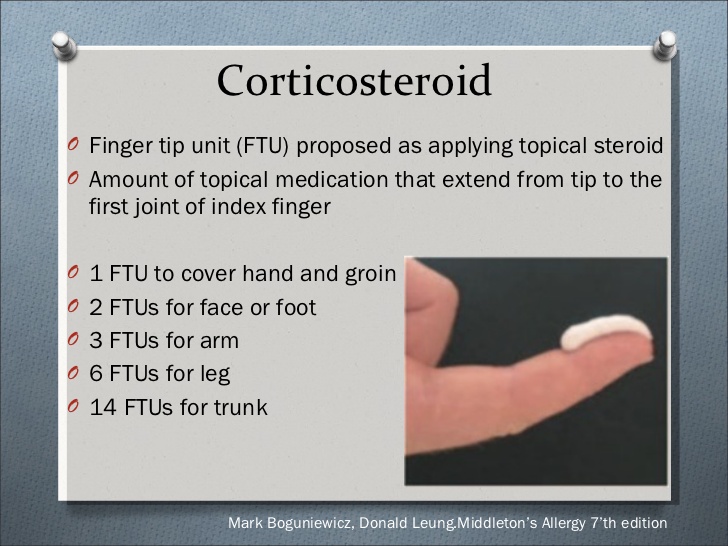
A fingertip is from the very end of the finger to the first crease in the finger. The “Fingertip unit” (FTU) is a validated method of applying topical drugs in suitable safe quantities. One FTU is approximately 0.5 g, and is defined as the amount of topical steroid that can be squeezed out from a tube (with a stand-ard 5 mm nozzle) along an adult’s fingertip i.e., from the very end of the finger to the first crease of an adult’s index finger.

The frequency of application may vary with the product used and the condition being treated. Once or twice-daily application is recommended for most preparations. More frequent application is usually not needed, since the stratum corneum acts as a reservoir for these lipophilic compounds. An alter-nate day or even twice weekly application may be recommended in some chronic conditions due to this depot effect of TCS.

Duration of treatment for most conditions should not exceed 2-4 weeks, regardless of the potency of the TCS. Chronic application of topical steroids can induce tolerance and tachyphylaxis. High-potency steroids should not be used for more than three weeks continuously. If there is worsening of the le-sions or no change noticed, the product needs to be discontinued and re-evaluation of the diagnosis is indicated.

Selecting a vehicle

Topical corticosteroid preparations consist of an active ingredient and a vehicle (or solvent). In addition to being a carrier for the corticosteroid, the vehicle affects potency based on alterations of the steroid release rate and bioavailability.

The selection of vehicle depends on the type of lesions and the anatomical region. Some vehicles should be used only in certain parts of the body. Most topical corticosteroid preparations are available in several forms, including ointments, creams, gels, aerosols and lotions.

Ointments usually contain petrolatum, waxes, paraffin, propylene glycol, or mineral oil.

Preferred vehicle for Palm and Soles; nonhairy skin and also for dry or thick, hyperkeratotic lesions.

Most occlusive, provides better steroid absorption/penetration. Atopic skin conditions due to hydrating nature. Not suitable for hairy and intertriginous areas

Creams (oil-in-water emulsions) have good lubricating qualities and their ability to vanish into the skin make them cosmetically appealing.

May be used in any area of the body. Preferred vehicle for wet or weepy (exudative) lesions due to their drying effect; also for between skin folds.

Good lubricating and vanishing property, and cosmetic appeal. Generally, less potent than ointments. Suitable for use in intertriginous areas unlike ointments

Gels and lotions are the least greasy and occlusive of all topical steroid vehicles.

Gels may be used on the scalp and other hairy skin areas due to their drying & cooling qualities. Jelly-like effect makes it suitable for exudative inflammation (e.g., poison ivy) and for acne. Non-greasy and non-occlusive.

Lotions/Solutions contain alcohol, which has a drying effect on an oozing (weeping) lesion.

Preferred vehicles for the scalp and other hairy skin areas; between skin folds; moist, macerated lesions.

Easy to apply. Non-greasy and non-occlusive. Least potent topical therapies. Drying and cooling effects.

Topical corticosteroids, Combinations with antibacterials and/or antifungals

TCS combination with an anti-infective agent is indicated where the risk of infection is high or where there is an expectation that potentially dangerous numbers of bacteria or fungi will be present on the skin. The use of these combination products should be limited as some of the components can be sensitizing (e.g., Neomycin). These formulations are generally overused and sometimes, for cosmetic reasons. They allow for treatment without proper diagnosis and should be discouraged.

Recommendations for optimizing the use of topical corticosteroids

  • Children generally require a shorter duration of treatment and a lower potency steroid.
  • Prescribe for the right dermatoses, not as empiric therapy for every “rash”.
  • Use appropriate steroid formulation and potency to achieve disease control.
  • Initiate maintenance therapy with a lower potency steroid after achieving control of the acute inflammation.
  • Taper off the treatment upon complete remission of skin diseases, after prolonged therapy.
  • Limit the duration of use
  • Caution when prescribing topical steroid for certain body regions (e.g., groin, face, axillae, and flexures).
  • To be aware of the adverse effects and act immediately to counteract them.
  • When infections necessitate the addition of an antibiotic or antifungal, systemic treatment should be considered.
  • When the diagnosis is unclear or the condition is nonresponsive to standard treatment, refer to a dermatologist.

Comparison of topical corticosteroids

Ultra-high and High Potency TCS

Recommended for thick skin areas like Palm and Soles for: Atopic dermatitis (resistant); Discoid lupus; Hyperkeratotic eczema; Lichen planus; Lichen sclerosus (skin); Psoriasis; Severe hand eczema.

High-potency may also be used on the Trunk, Extremities, Scalp & Hairy skin areas for: Scalp dermatitis; Atopic dermatitis; Psoriasis, etc.

They pose the highest risk of systemic side effects. Avoid abrupt discontinuation; continuous daily use >3 weeks, and occlusive dressings.

Monitor for symptoms of adrenal suppression: weakness, weight loss, hypotension, and gastrointestinal distress.

Lower potency agents are preferred for the face, groin, armpits, or skin folds due to susceptibility to local side effects and systemic absorption

Ultra-high potency includes: Betamethasone dipropionate glycol (augmented) 0.05% Cream, Ointment, Lotion; Clobetasol 17-propionate 0.05% Cream, Ointment, Lotion; Halobetasol propionate 0.05% Ointment.

High potency includes: Amcinonide 0.1% Ointment, Cream, Lotion; Betamethasone dipropionate 0.05% Ointment, Cream, Lotion; Betamethasone valerate 0.1% Ointment; Fluocinonide 0.05% Cream, Ointment, Gel; Halobetasol propionate 0.05% Cream; Mometasone furoate 0.1% Ointment.

Moderate Potency TCS

Recommended for Trunk, Extremities, Scalp & Hairy skin areas for: Alopecia areata; Atopic dermatitis; Contact dermatitis (severe); Lichen sclerosus (vulva); Nummular eczema; Perianal inflammation (severe); Scabies (after scabicide); Seborrheic dermatitis; Severe dermatitis; Severe intertrigo (short-term); Stasis dermatitis.

Moderate to low potency agents should be used when treatment involves large body surface area.

Duration of treatment: May be used for up to 3 months when treating non-facial or non-intertriginous areas.

Occlusive dressings should be avoided.

Low Potency TCS

Recommended for thin skin areas like Face, Neck, Intertriginous or Genital areas for: Dermatitis (face, eyelids, diaper region); Intertrigo; Perianal inflammation.

These are agents of choice for children, pregnant women, elderly or for treating large areas.

Available TCS Combinations with Antibiotics

  • Betamethasone + Neomycin (Topical)
  • Hydrocortisone + Gentamicin (Topical)
  • Hydrocortisone + Neomycin (Topical)

Available TCS Combinations with Antifungals

  • Beclometasone + Clotrimazole
  • Betamethasone + Clotrimazole
  • Clobetasol + Clotrimazole
  • Dexamethasone + Clotrimazole
  • Diflucortolone + Isoconazole
  • Hydrocortisone + Miconazole (Topical)

Available TCS Combinations with Antibiotics and Antifungals

  • Beclometasone + Clotrimazole + Gentamicin
  • Beclometasone + Clotrimazole + Gentamicin + Clioquinol
  • Betamethasone + Clotrimazole + Gentamicin
  • Betamethasone + Clotrimazole + Neomycin
  • Betamethasone + Tolnaftate + Gentamicin
  • Betamethasone + Tolnaftate + Gentamicin + Clioquinol
  • Betamethasone + Tolnaftate + Neomycin + Clioquinol
  • Clobetasol + Ketoconazole + Neomycin
  • Clobetasol + Miconazole + Gentamicin
  • Clobetasone + Miconazole + Gentamicin
  • Dexamethasone + Clotrimazole + Gentamicin
  • Dexamethasone + Clotrimazole + Neomycin
  • Dexamethasone + Miconazole + Neomycin
  • Fluocinolone + Miconazole + Neomycin
  • Miconazole + Beclometasone + Neomycin
  • Miconazole + Clobetasol + Neomycin
  • Triamcinolone + Econazole + Gentamicin

Adverse effects of topical corticosteroids (TCS)

Risk factors for adverse effects

  • Duration of treatment — long-term treatment is likely to result in systemic absorption.
  • Area of the skin being treated — treating large areas of skin increases the risk of absorption.
  • Condition of the skin — absorption is greatest in thin, inflamed skin.
  • Potency of the topical corticosteroid — the greater the potency, the greater the risk of absorption.
  • Occlusion — use of topical corticosteroids under occlusion increases the risk of systemic absorption.
  • Age — children and elderly people are more susceptible to the adverse effects of topical corticosteroids because they have a thinner epidermis.

Local adverse effects

Common and mostly occur on the face, in skin folds, and in areas that are treated over the long term

  • Transient burning or stinging — this is common, especially in the first 2 days of application on untreated, inflamed skin.
  • Worsening and spreading of untreated infection.
  • Thinning of the skin (atrophy) — the skin improves over a period after stopping treatment.
  • Permanent stretch marks or striae. Most common in the groin, axillae, and inner thigh areas.
  • Allergic contact dermatitis — due to the corticosteroid or the excipients. Lower potency agents like Hydrocortisone may be more allergenic.
  • Acne (or worsening of existing acne) or rosacea. Common in the face with high potency agents.
  • Hypopigmentation — More common in the blacks. May be reversible.
  • Excessive hair growth at the site of application (hypertrichosis). Reversible.

Systemic adverse effects

Rare, but may occur more frequently in the presence of risk factors including infants and children

  • Adrenal suppression.
  • Cushing’s syndrome.
  • Hyperglycaemia
  • Growth retardation in children.

Minimizing adverse effects

  • Prescribe the least potent formulation which is fully effective (advise the person to apply it thinly to affected areas, no more than twice daily).
  • Consider prescribing an appropriate quantity of an emollient for use alongside the topical corticosteroid (for moisturizing purposes).
  • Avoid prescribing potent corticosteroids for use on the face.
  • Unless under specialist supervision, the use of potent (such as betamethasone valerate 0.1%) and very potent (such as clobetasol propionate 0.1%) topical corticosteroids, should be limited to: Use for up to 2 weeks, and No more than 50 g each week; Once–daily application is usually sufficient — maximum of twice daily.
  • Avoid using occlusive dressings with topical corticosteroids (especially on large areas of the body).
  • If a topical corticosteroid is needed for maintenance therapy, consider incorporating regular periods when they are withdrawn (for as long as possible) and emollients are used on their own.
  • If the person is using large amounts of topical corticosteroid regularly, monitor them for signs of systemic adverse effects (such as adrenal suppression) and local adverse effects (such as areas of thin skin or striae).
  • Monitor the height of children who are using large amounts of topical corticosteroid.

References

Available on request

Therapeutic Analysis of Cough & Cold Preparations Available in Nigerian Market

Flu, COVID-19, Allergies, or a Cold?

Specific treatment recommendations for the common symptoms associated with cough and cold

Productive cough:

Characterized by the presence of excessive sputum and may be associated with various underlying diseases e.g. chronic bronchitis, Tuberculosis, LVF etc.

Treatment of the underlying cause recommended e.g. with antibiotics.

Avoid antitussives as suppression of cough can be harmful

Expectorants may help to reduce sputum viscosity so bronchial secretions can be expectorated. There are 2 types:

  • Mucolytic expectorants e.g. Ambroxol, Acetylcysteine, Carbocysteine, Bromhexine.
  • Mucokinetic expectorants e.g. Sodium or potassium citrate, Ammonium chloride, Potassium iodide, Guaifenesin, Tolu balsam.

Expectorants may cause bronchospasm in patients with asthma.

Non-productive cough:

Characterized by dry, irritating cough with little or no sputum.

Suppression of cough using antitussives (e.g. Dextromethorphan, Codeine) usually indicated

May cause excessive drowsiness

Postnasal drip cough:

A combination of first-generation antihistamine (e.g. diphenhydramine, chlorphenamine) and nasal decongestant (e.g. pseudoephedrine, phenylephrine) may be indicated. Antibiotics may be added if necessary for bacterial sinusitis.

Caution when using decongestants in patients with hypertension or other cardiovascular disease.

Asthmatic cough:

Short-acting beta-agonists (SABAs e.g. Salbutamol, Terbutaline) are usually indicated. Inhaled corticosteroids may be added depending on the severity.

GERD-associated cough:

H2RA (e.g. Ranitidine, Famotidine) or PPI (e.g. Omeprazole, Pantoprazole) are the treatments of choice. Non-drug measures include elevation bedhead, light dinner, diet modification, etc.

ACE inhibitor associated cough:

Substitute ACEI with ARB (e.g. Losartan). Antitussives not useful

Nasal congestion:

Systemic decongestants (e.g. Pseudoephedrine, Phenylephrine) or nasal decongestants (e.g. Oxymetazoline, Xylometazoline) may be useful.

They act indirectly to reduce blood flow, edema and swelling in the nasal area, thereby helping to alleviate nasal congestion.

Side effects may include rebound congestion, palpitations, tachycardia, burning sensation with topical agents.

Caution in patients with cardiovascular disease especially with the systemic agents.

Saline spray or drops may be effective alternatives and should be considered first-line especially in children.

Sneezing, rhinorrhea:

First-generation antihistamines (e.g. Chlorphenamine, Diphenhydramine) can be useful in controlling runny nose due to their anticholinergic properties. Non-drowsy antihistamines (e.g. Loratadine) are also effective especially when allergy is the underlying cause

Fever, headache, sore throat:

Analgesics (e.g. Paracetamol, Ibuprofen) are generally useful.

Non-drug measures namely increased fluid intake and rest can be beneficial in most cases of cough and cold.

Therapeutic classification of compound cough & cold preparations available in Nigeria

See EMDEX Mobile App for the proprietary preparations

Analgesic-containing preparations

Analgesic with Antihistamine

  • Paracetamol + Cetirizine
  • Paracetamol + Chlorphenamine
  • Paracetamol + Diphenhydramine

Analgesic with Antihistamine & Antitussive

  • Paracetamol + Loratadine + Dextromethorphan
  • Paracetamol + Doxylamine + Dextromethorphan

Analgesic with Antihistamine & Expectorant

  • Paracetamol + Chlorphenamine + Ammonium chloride + Sodium citrate

Analgesic with Antihistamine & Vitamin C

  • Paracetamol + Chlorphenamine + Ascorbic acid

Analgesic with Decongestant & Antihistamine

  • Paracetamol + Phenylephrine + Chlorphenamine
  • Paracetamol + Caffeine + Phenylephrine + Chlorphenamine
  • Paracetamol + Caffeine + Phenylephrine + Pheniramine
  • Paracetamol + Pseudoephedrine + Chlorphenamine
  • Paracetamol + Caffeine + Pseudoephedrine + Chlorphenamine
  • Paracetamol + Pseudoephedrine + Triprolidine

Analgesic with Decongestant & Antitussive

  • Paracetamol + Phenylephrine + Dextromethorphan
  • Paracetamol + Pseudoephedrine + Dextromethorphan

Analgesic with Decongestant, Antihistamine & Vitamin C

  • Paracetamol + Caffeine + Phenylephrine + Chlorphenamine + Ascorbic acid

Analgesic with Decongestant, Antihistamine & Expectorant

  • Paracetamol + Pseudoephedrine + Chlorphenamine + Ammonium chloride

Analgesic with Decongestant, Antihistamine & Antitussive

  • Paracetamol + Pseudoephedrine + Chlorphenamine + Dextromethorphan

Compound decongestant preparations

See analgesic-containing preparations above.

Decongestant with Antihistamine

  • Phenylephrine + Chlorphenamine
  • Pseudoephedrine + Chlorphenamine

Decongestant with Antihistamine & Antitussive

  • Pseudoephedrine + Chlorphenamine + Dextromethorphan
  • Phenylephrine + Chlorphenamine + Dextromethorphan
  • Ephedrine + Promethazine + Codeine

Decongestant with Antihistamine & Expectorant

  • Ephedrine + Chlorphenamine + Ammonium chloride + Sodium citrate + Menthol
  • Ephedrine + Diphenhydramine + Ammonium chloride + Sodium citrate + Menthol
  • Ephedrine + Cetirizine + Ammonium chloride + Sodium citrate
  • Ephedrine + Cetirizine + Ammonium chloride + Sodium citrate + Menthol
  • Ephedrine + Chlorphenamine + Ammonium chloride + Sodium citrate

Decongestant with Antihistamine, Antitussive & Expectorant

  • Phenylephrine + Chlorphenamine + Dextromethorphan + Guaifenesin
  • Pseudoephedrine + Triprolidine + Codeine + Potassium guaiacolsulfonate

Compound antihistamine preparations

See analgesic- and decongestant-containing preparations above

Antihistamine with Expectorant

  • Diphenhydramine + Ammonium chloride + Ammonium bicarbonate
  • Diphenhydramine + Ammonium chloride
  • Diphenhydramine + Sodium citrate
  • Chlorphenamine + Ammonium chloride + Sodium citrate
  • Chlorpheniramine + Ammonium chloride + Sodium citrate + Guaifenesin
  • Chlorphenamine + Ammonium chloride + Sodium citrate + Ipecacuanha
  • Chlorphenamine + Ammonium chloride + Sodium citrate + Ipecacuanha + Menthol
  • Diphenhydramine + Ammonium chloride + Sodium citrate + Menthol
  • Diphenhydramine + Ammonium chloride + Menthol
  • Diphenhydramine + Sodium citrate + Menthol
  • Diphenhydramine + Sodium citrate + Menthol + Tolu
  • Chlorphenamine + Ammonium chloride + Sodium citrate + Menthol
  • Chlorphenamine + Sodium citrate + Menthol

Antihistamine with Antitussive

  • Chlorphenamine + Dextromethorphan
  • Promethazine + Pholcodeine

Antihistamine with Antitussive & Expectorant

  • Chlorphenamine + Dextromethorphan + Guaifenesin
  • Diphenhydramine + Codeine + Sodium citrate + Menthol
  • Diphenhydramine + Codeine + Ammonium chloride + Sodium citrate + Menthol
  • Diphenhydramine + Codeine + Ammonium chloride + Menthol

Antihistamine with Menthol

  • Diphenhydramine + Menthol
  • Cetirizine + Menthol

Compound mucolytic/expectorant preparations

See also above for preparations containing analgesic, decongestant or antihistamine

Antitussive with Expectorant

  • Dextromethorphan + Guaifenesin

Expectorants with Demulcents

  • Thyme + Primula
  • Squill oxymel + Ipecacuanha
  • Ammonium chloride + Ipecacuanha + Liquorice
  • Ammonium chloride + Ipecacuanha + Liquorice + Peppermint oil
  • Ipecacuanha + Honey + Glycerol
  • Ammonium chloride + Sodium citrate + Squill + Menthol
  • Sodium citrate + Ipecacuanha + Squill oxymel + Anise water + Menthol
  • Ipecacuanha + Citric acid + Honey + Glycerol

Mucolytic with Antibiotic

  • Bromhexine + Co-trimoxazole

Mucolytic with Antihistamine

  • Carbocisteine + Promethazine

Mucolytic with Antihistamine & Expectorant

  • Bromhexine + Diphenhydramine + Ammonium chloride + Menthol

Mucolytic with Antitussive & Expectorant

  • Bromhexine + Dextromethorphan + Ammonium chloride + Menthol

Mucolytic with Expectorant & Bronchodilator

  • Bromhexine + Guaifenesin + Salbutamol
  • Bromhexine + Guaifenesin + Salbutamol + Menthol
  • Bromhexine + Guaifenesin + Terbutaline + Menthol
  • Ambroxol + Guaifenesin + Salbutamol + Menthol

Other compound cough & cold mixtures

Herbal cough & cold remedies

  • Thyme + Grindelia + Pimpinella + Primrose + Rose

Glycrrhiza + Terminalia + Zingiber + Curcuma + Mentha

India bans 328 fixed-dose combination drugs

Some of these drug products are available in Nigeria

The government of India has banned the manufacture, sale and distribution of 328 combination drugs with immediate effect, describing them as “irrational” and “unsafe” drug combinations. See the A-Z list below.

According to the health ministry, there was “no therapeutic justification for the ingredients contained in the 328 FDCs and that these FDCs may involve risk to human beings”.

The All India Drug Action Network welcomed the government ban, saying “The people of India have been made the consumers of unsafe medicines for too long,”.

The president of the Indian Drug Manufacturers’ Association said the verdict would be respected

(Source: Reuters and Times of India)

List of 328 combination drugs banned by India – September 13, 2018

  • Aceclofenac (SR) + Paracetamol
  • Aceclofenac + Paracetamol + Famotidine
  • Aceclofenac + Paracetamol + Rabeprazole
  • Aceclofenac + Zinc Carnosine
  • Acetaminophen + Guaifenesin + Dextromethorphan + Chlorpheniramine
  • Acetaminophen + Loratadine + Ambroxol + Phenylephrine
  • Acriflavine + Thymol + Cetrimide
  • Acrivastine + Paracetamol + Caffeine + Phenylephrine
  • Albuterol + Bromhexine + Theophylline
  • Albuterol + Etofylline + Bromhexine + Menthol
  • Alginic Acid + Sodium Bicarbonate + Dried Aluminium Hydroxide + Magnesium Hydroxide
  • Allantoin + Dimethicone + Urea + Propylene + Glycerin + Liquid Paraffin
  • Ambroxol + Levocetirizine + Phenylephrine + Guaiphenesin + Menthol
  • Ambroxol + Guaifenesin + Phenylephrine + Chlorpheniramine
  • Ambroxol + Salbutamol + Choline Theophyllinate + Menthol
  • Ambroxol + Salbutamol + Theophylline
  • Ambroxol + Terbutaline + Dextromethorphan
  • Ambroxol+ Guaiphenesin + Ammonium Chloride + Phenylephrine + Chlorpheniramine Maleate + Menthol
  • Ammonium Chloride + Dextromethorphan + Cetirizine + Menthol
  • Ammonium Chloride + Sodium Citrate + Chlorpheniramine Maleate + Menthol
  • Ammonium Citrate + Vitamin B 12 + Folic Acid + Zinc Sulphate
  • Amoxicillin + Cefixime + Potassium Clavulanic Acid
  • Amoxicillin + Dicloxacillin
  • Amoxicillin 250 mg + Potassium Clavulanate Diluted 62.5
  • Amoxycillin + Dicloxacillin + Serratiopeptidase
  • A moxycillin + Tinidazole
  • Ascorbic Acid + Manadione Sodium Bisulphate + Rutin + Dibasic Calcium Phosphate + Adrenochrome mono Se
  • Atorvastatin + Vitamin D3 + Folic Acid + Vitamin B12 + Pyridoxine
  • Azithromycin + Acebrophylline
  • Azithromycin + Ambroxol
  • Azithromycin + Cefixime
  • Azithromycin + Cefpodoxime
  • Azithromycin + Levofloxacin
  • Azithromycin + Ofloxacin
  • Beclomethasone + Clotrimazole + Chloramphenicol + Gentamycin + Lignocaine Ear drops
  • Beclomethasone + Clotimazole + Neomycin + lodochlorohydroxyquinone
  • Beclomethasone + Clotrimazole + Gentamicin + lodochlorhydroxyquinoline
  • Beclomethasone Diproprionate + Neomycin + Tolnaftate + lodochlorhydroxyquinoline + Chlorocresol
  • Benfotiamine + Metformin
  • Benzoxonium Chloride + Lidocaine
  • Betahistine + Ginkgo Biloba Extract + Vinpocetine + Piracetam
  • Betamethasone + Fusidic Acid + Gentamycin + Tolnaftate + lodochlorhydroxyquinoline (ICHQ)
  • Betamethasone + Gentamicin + Tolnaftate + lodochlorhydroxyquinoline
  • Betamethasone + Gentamycin + Zinc Sulphate + Clotrimoazole + Chlorocresol
  • Betamethasone + Neomycin + Tolnaftate + lodochlorohydroxyquinoline + Cholorocresol
  • Borax + Boric Acid + Naphazoline + Menthol + Camphor + Methyl Hydroxy Benzoate
  • Bromhexine + Phenylephrine + Chlorpheniramine + Paracetamol
  • Bromhexine + Cetirizine + Phenylephrine IP+Guaifenesin + Menthol
  • Bromhexine + Dextromethorphan
  • Bromhexine + Dextromethorphan + Phenylephrine + Menthol
  • Bromhexine + Phenylephrine + Chlorepheniramine Maleate
  • Caffeine + Paracetamol + Chlorpheniramine
  • Caffeine + Paracetamol + Phenylephrine + Cetirizine
  • Calcium Gluconate + Chlorpheniramine + Vitamin C
  • Calcium Gluconate + Levocetirizine
  • Cefixime + Levofloxacin
  • Cefixime + Linezolid
  • Cefpodoxime Proxetil + Levofloxacin
  • Cefuroxime + Linezolid
  • Cephalexin + Neomycin + Prednisolone
  • Certirizine + Phenylephrine + Paracetamol + Caffeine + Nimesulide
  • Cetirizine + Acetaminophen + Dextromethorphan + Phenyephrine + Zinc Gluconate
  • Cetirizine + Ambroxol + Guaiphenesin + Ammonium Chloride + Phenylephrine + Menthol
  • Cetirizine + Dextromethorphan + Ambroxol
  • Cetirizine + Dextromethorphan + Bromhexine + Guaifenesin
  • Cetirizine + Dextromethorphan + Phenylephrine + Tulsi
  • Cetirizine + Dextromethorphan + Phenylephrine + Zinc Gluconate + Paracetamol + Menthol
  • Cetirizine + Dextromethorphan + Zinc Gluconate + Menthol
  • Cetirizine + Diethylcarbamazine
  • Cetirizine + Phenylephrine + Dextromethorphan + Menthol
  • Cetirizine + Phenylephrine + Paracetamol + Ambroxol + Caffeine
  • Cetirizine + Phenylephrine + Paracetamol + Zinc Gluconate
  • Cetririzine + Nimesulide + Phenylephrine
  • Chlopheniramine Maleate + Dextromethorphan + Guaiphensin + Phenylephrine
  • Chloramphenicol + Beclomethasone + Clomitrimazole + Lignocaine
  • Chloramphennicol + Lignocaine + Betamethasone + Clotrimazole + Ofloxacin + Antipyrine
  • Chlorphaniramine + Ammonium Chloride + Sodium Chloride
  • Chlorpheniramine + Ammonium Chloride + Chloroform + Menthol
  • Chlorpheniramine + Ammonium Chloride + Noscapine + Sodium Citrate
  • Chlorpheniramine + Codeine + Sodium Citrate + Menthol Syrup
  • Chlorpheniramine + Dextromethorphan + Phenylephrine + Paracetamol
  • Chlorpheniramine + Paracetamol + Pseudoephedrine + Caffeine
  • Chlorpheniramine + Phenylephrine + Caffeine
  • Chlorpheniramine + Phenylephrine + Dextromethophan + Menthol
  • Chlorpheniramine + Phenylephrine + Paracetamol + Zink Gluconate
  • Chlorpheniramine + Terpin + Antimony Potassium Tartrate + Ammonium Chloride + Sodium Citrate + Menthol
  • Chlorpheniramine + Vasaka + Tolubalsm + Ammonium Chloride + Sodium Citrate + Menthol
  • Chlorpheniramine + Vitamin C
  • Chlorpheniramine Maleate + Ammonium Chloride + Sodium Citrate
  • Chlorpheniramine + Ammonium Chloride + Menthol
  • Chlorpromazine + Trihexyphenidyl
  • Chromium Polynicotinate + Metformin
  • Cilnidipine + Metoprolol Succinate + Metoprolol Tartrate
  • Ciprofloxacin + Fluocinolone + Clotrimazole + Neomycin + Chlorocresol
  • Ciprofloxacin + Fluticasone + Clotrimazole + Neomycin
  • Ciprofloxacin + Phenazopyridine
  • Clidinium + Paracetamol + Dicyclomine + Activated Dimethicone
  • Clindamycin + Clotrimazole + Lactic Acid Bacillus
  • Clindamycin + Telmisartan
  • Clobetasol + Gentamicin + Tolnaftate + lodochlorhydroxyquinone + Ketoconazole
  • Clobetasol + Neomycin + Miconazole + Clotrimazole
  • Clobetasol + Neomycin + Miconazole + Zinc Sulphate
  • Clobetasol + Ofloxacin + Ketoconazol + Zinc Sulphate
  • Clobetasol + Ofloxacin + Miconazole + Zinc Sulphate
  • Clobetasol Propionate + Ofloxacin + Ornidazole + Terbinafine
  • Clobetasole + Gentamicin + Miconazole + Zinc Sulphate
  • Clomifene Citrate + Ubidecarenone + Zinc + Folic Acid + Methylcobalamin + Pyridoxine + Lycopene + Selenium + Levocarnitine Tartrate + L-Arginine
  • Clotrimazole + Beclomethasone + Lignocaine + Ofloxacin + Acetic Aicd + Sodium Methyl Paraben + Propyl Paraben
  • Clotrimazole + Beclomethasone + Ofloxacin + Lignocaine
  • Clotrimazole + Ofloxaxin + Lignocaine + Glycerine and Propylene Glycol
  • Codeine + Chlorpheniramine + Alcohol Syrup
  • Codeine + Levocetirizine + Menthol
  • Combikit of 3 tablets of Serratiopeptidase (enteric c oated 20000 units) + Diclofenac Potassium & 2 tablets of D
  • Combikit of Azithromycin, Secnidazole and Fluconazole
  • Combikit of Fluconazole Tablet, Azithromycin Tablet and Ornidazole Tablets
  • Cyproheptadine + Thiamine
  • Dextrometharphan + Chlopheniramine + Ammonium Chloride+ Menthol
  • Dextrometharphan + Chlopheniramine + Ammonium + Sodium Citrate + Menthol
  • Dextrometharphan + Phenylephrine + Guaiphenesin
  • Dextromethophan + Chlopheniramine + Bromhexine
  • Dextromethorphan + Ambroxol + Ammonium Chloride + Chlorpheniramine + Menthol
  • Dextromethorphan + Ambroxol + Guaifenesin + Phenylephrine + Chlorpheniramine
  • Dextromethorphan + Bromhexine + Guaiphenesin
  • Dextromethorphan + Bromhexine + Guaiphenesin + Menthol
  • Dextromethorphan + Cetirizine
  • Dextromethorphan + Cetirizine + Guaifenesin + Ammonium Chloride
  • Dextromethorphan + Chlorpheniramine + Chlorpheniramine Maleate
  • Dextromethorphan + Chlorpheniramine + Guaiphenesin
  • Dextromethorphan + Levocetirizine + Phenylephrine + Zinc
  • Dextromethorphan + Paracetamol + Cetirizine + Phenylephrine
  • Dextromethorphan + Phenylephrine + Ammonium Chloride + Menthol
  • Dextromethorphan + Phenylephrine + Bromhexine + Guaifenesin + Chlorpheniramine
  • Dextromethorphan + Phenylephrine + Cetirizine + Paracetamol + Caffeine
  • Dextromethorphan + Phenylephrine + Cetirizine + Zinc + Menthol
  • Dextromethorphan + Phenylephrine + Guaifenesin + Certirizine + Acetaminophen
  • Dextromethorphan + Phenylephrine + Guaifenesin + Triprolidine
  • Dextromethorphan + Phenylephrine + Tripolidine + Menthol
  • Dextromethorphan + Phenylephrine + Zinc Gluconate + Menthol
  • Dextromethorphan + Tripolidine + Phenylephirine
  • Dextromethorphan + Triprolidine + Phenylephrine
  • Dextromethorphan + Bromhexine + Chlorpheniramine Maleate + Guaiphenesin
  • Dextromethorphan + Promethazine
  • Diclofenac + Paracetamol + Chlorpheniramine maleate + Magnesium Trisillicate
  • Diclofenac + Paracetamol + Chlorzoxazone + Famotidine
  • Diclofenac + paracetamol + Magnesium Trisilicate
  • Diclofenac + Paracetamol injection
  • Diclofenac + Tramadol + Chlorzoxazone
  • Diclofenac + Tramadol + Paracetamol
  • Diclofenac + Zinc Carnosine
  • Dicyclomine + Paracetamol + Domperidone
  • Diethyl Carbamazine + Chlorpheniramine + Guaifenesin
  • Diethylcabamazine Citrate + Cetirizine + Guaiphenesin
  • Diethylcarbamazine + Cetirizine + Ambroxol
  • Diphenhydramine + Guaifenesin + Bromhexine + Ammonium Chloride + Menthol
  • Diphenhydramine + Guaiphenesin + Ammonium Chloride + Bromhexine
  • Diphenhydramine + Terpine + Ammonium Chloride + Sodium Chloride + Menthol
  • Diphenoxylate + Atropine + Furazolidonee
  • Disodium Hydrogen Citrate + Paracetamol
  • Doxycycline + Serratiopeptidase
  • Doxylamine + Pyridoxine + Mefenamic Acid + Paracetamol
  • Dried Alumnium Hydroxie Gel + Prophantheline + Diazepam
  • Drotaverine + Clidinium + Chlordiazepoxide
  • Enrofloxacin + Bromhexin
  • Ergotamine Tartrate + Belladona Dry Extarct+Caffeine + Paracetamol
  • Ethylmorphine + Noscapine + Chlorpheniramine
  • Famotidine + Oxytacaine + Magaldrate
  • Flunarizine + Paracetamole + Domperidone
  • Flupentixol + Escitalopram
  • Furazolidone + Metronidazole + Loperamide
  • Gabapentin + Mecobalamin + Pyridoxine + Thiamine
  • Gentamicin Sulphate + Clotrimazole + Betamethasone + Lignocaine
  • Gentamycin + Dexamethasone + Chloramphenicol + Tobramycin + Ofloxacin
  • Glibenclamide + Metformin (SR)+ Pioglitazone
  • Gliclazide 40mg + Metformin 400mg
  • Gliclazide 80 mg + Metformin 325 mg
  • Glimepiride + Pioglitazone + Metformin
  • Glimepiride 1mg/2mg/3mg + Pioglitazone 15mg/15mg/15mg + Metformin 1000mg/1000mg/1000mg
  • Glimepiride 1mg/2mg+ Pioglitazone 15mg/15mg + Metformin 850mg/850mg
  • Glipizide 2.5mg + Metformin 400 mg
  • Glucosamine + Methyl Sullfonyl Methane + Vitamin D3 + Manganese + Boron + Copper + Zinc
  • Guaifenesin + Bromhexine + Chlorpheniramine + Paracetamol
  • Guaifenesin + Bromhexine + Chlorpheniramine + Phenylephrine + Paracetamol + Serratiopeptidase (as enteric coated granules) 10000 SP Units
  • Guaifenesin + Dextromethorphan
  • Guaifenesin + Diphenhydramine + Bromhexine + Phenylephrine
  • Heparin + Diclofenac
  • Imipramine + Chlordiazepoxide + Trifluoperazine + Trihexyphenidyl
  • Ketoconazole + Tea Tree oil + Allantion + Zinc Oxide + Aloe Vera + Jojoba oil + Lavander oil + Soa noodels
  • Ketotifen + Cetirizine
  • Ketotifen + Levocetrizine
  • Ketotifen + Theophylline
  • L-5-Methyltetrahydrofolate Calcium + Escitalopram
  • L-Arginine + Sildenafil
  • Levocetirizine + Ambroxol + Phenylephrine + Guaiphenesin
  • Levocetirizine + Ambroxol + Phenylephrine + Paracetamol
  • Levocetirizine + Dextromethorphan + Zinc
  • Levocetirizine + Montelukast + Acebrophylline
  • Levocetirizine + Paracetamol + Phenylephirine + Caffeine
  • Levocetirizine + Phenylephrine + Ambroxol + Guaiphenesin + Paracetamol
  • Levocetirizine + Ranitidine
  • Levofloxacin + Bromhexine
  • Levofloxacin + Ornidazole + Alpha Tocopherol Acetate
  • Levothyroxine + Phyridoxine + Nicotinamide
  • Lignocaine + Clotrimazole + Ofloxacin + Beclomethasone
  • Lornoxicam + Paracetamol + serratiopeptidase
  • Lornoxicam + paracetamol + Tramadol
  • Lornoxicam + paracetamol + trypsin
  • Magaldrate + Famotidine + Simethicone
  • Magaldrate + Papain + Fungul Diastase + Simethicone
  • Magaldrate + Ranitidine + Pancreatin + Domperidone
  • Mebeverine & Inner HPMC capsule (Streptococcus Faecalis + Clostridium butyricum + Bacillus mesentricus + Lactic Acid Bacillus)
  • Menthol + Anesthetic Ether
  • Metformin (SR) 500mg + Pioglitazone 5mg
  • Metformin (Sustainded Release) 500mg + Pioglitazone 15 mg + Glimepiride 3mg
  • Metformin + Atorvastatin
  • Metformin + Bromocriptine
  • Metformin + Gliclazide + Chromium Polynicotinate
  • Metformin + Gliclazide + Piogllitazone + Chromium Polynicotinate
  • Metformin + Glimepiride + Methylcobalamin
  • Metformin 1000/1000/500/500mg + Pioglitazone 7.5/7.5/7.5/7.5mg + Glimepiride 1/2/1/2mg
  • Metformin 500mg/500mg+Gliclazide SR 30mg/60mg + Pioglitazone 7.5mg/7.5mg
  • Metformin 850mg + Pioglitazone 7.5 mg + Glimepiride 1mg
  • Metformin 850mg + Pioglitazone 7.5 mg + Glimepiride 2mg
  • Metformin ER + Gliclazide MR + Voglibose
  • Metronidazole + Norfloxacin
  • Metronidazole + Tetracycline
  • N-Acetyl Cysteine + Ambroxol + Phenylephrine + Levocertirizine
  • Naphazoline + Carboxy Methyl Cellulose + Menthol + Camphor + Phenylephrine
  • Naphazoline + Chlorpheniramine + Zinc Sulphate + Boric Acid + Sodium Chloride + Chlorobutol
  • Naproxen + Paracetamol
  • Neomycin + Doxycycline
  • Nimesulide + Certirizine + Phenylephrine
  • Nimesulide + Cetrizine + Caffeine
  • Nimesulide + Diclofenac
  • Nimesulide + Dicyclomine
  • Nimesulide + Loratadine + Phenylephrine + Ambroxol
  • Nimesulide + Paracetamol + Cetirizine + Phenylephrine
  • Nimesulide + Paracetamol + Levocetirizine + Phenylephrine + Caffeine
  • Nimesulide + Paracetamol Injection
  • Nimesulide + Paracetamol Suspension
  • Nimesulide + Phenylephrine + Caffeine + Levocetirizine
  • Nimesulide + Pitofenone + Fenpiverinium + Benzyl Alcohol
  • Nimesulide + Serratiopeptidase
  • Nimesulide + Tizanidine
  • Nimorazole + Ofloxacin
  • Norfloxacin+ Metronidazole + Zinc Acetate
  • Oflaxacin + Ornidazole Suspension
  • Ofloxacin + Clotrimazole + Betamethasone + Lignocaine
  • Ofloxacin + Metronidazole + Zinc Acetate
  • Ofloxacin + Nitazoxanide
  • Ofloxacin + Ornidazole + Zinc Bisglycinate
  • Olmesartan + Hydrochlorothiazide + Chlorthalidone
  • Omepraozle + Paracetmaol+ Diclofenac
  • Oxetacaine + Magaldrate + Famotidine
  • Pantoprazole (as Enteric Coated Tablet) + Zinc Carnosine (as Film Coated Tablets
  • Paracetamol + Ambroxol + Phenylephrine + Chlorpheniramine
  • Paracetamol + Caffeine + Codeine
  • Paracetamol + Caffine + Phenylephrine + Chlorpheniramine
  • Paracetamol + Cetrizine + Caffeine
  • Paracetamol + Chlorpheniramine + Ambroxol + Guaifenesin + Phenylephrine
  • Paracetamol + Codeine + Chlorpheniramine
  • Paracetamol + Dextromethorphan + Bromhexine + Phenylephrine + Diphenhydramine
  • Paracetamol + Dextromethorphan + Chlorpheniramine
  • Paracetamol + Diclofenac + famotidine
  • Paracetamol + Disodium Hydrogen Citrate + Caffeine
  • Paracetamol + DL Methionine
  • Paracetamol + domperidone + Caffeine
  • Paracetamol + Levocetirizine + Phenylephirine + Zink Gluconate
  • Paracetamol + Levocetirizine + Pseudoephedrine
  • Paracetamol + Loratadine + Dextromethophan + Pseudoepheridine + Caffeine
  • Paracetamol + Loratadine + Phenylephrine + Dextromethorphan + Caffeine
  • Paracetamol + mefenamic Acid + ranitidine + Dicyclomine
  • Paracetamol + Pheniramine
  • Paracetamol + Phenylephrine + Chlorpheneramine + Dextromethorphan + caffeine
  • Paracetamol + Phenylephrine + Chlorpheniramine + Zinc Gluconate
  • Paracetamol + Phenylephrine + Desloratadine + Zinc Gluconate + Ambroxol
  • Paracetamol + Phenylephrine + Levocetirizine + Caffeine
  • Paracetamol + Phenylephrine + Triprolidine
  • Paracetamol + Phenylephrine + Triprolidine + Caffeine
  • Paracetamol + Prochloperazine
  • Paracetamol + Prochlorperazine Maleate
  • Paracetamol + Promethazine
  • Paracetamol + Propyphenazone + Caffeine
  • Paracetamol + Pseudoephedrine + Cetrizine
  • Paracetamol + Pseudoephedrine + Dextromethorphan + Cetirizine
  • Paracetamol + Tapentadol
  • Paracetamol+Phenylephrine+Levocetirizine+Sodium Citrate
  • Paracetamol+Pseudoephedrine+Certirizine+Caffeine
  • Permethrin + Cetrimide + Menthol
  • Phenylbutazone + sodium salicylate
  • Phenylephrine + Chlorpheniramine + Paracetamol + Bromhexine + Caffeine
  • Pholcodine + Phenylephrine + Promethazine
  • Pioglitazone 15mg + Metformin 850 mg
  • Pioglitazone 30 mg + Metformin 500 mg
  • Pioglitazone 7.5/7.5mg + Metformin 500/1000mg
  • Pseudoephedrine + Bromhexine
  • Pseudoephedrine + Cetirizine
  • Pseudoephedrine + Dextromethorphan + Cetirizine
  • Rabeprazole + Diclofenac + Paracetamol
  • Rabeprazole + Zinc + Domperidone
  • Rabeprazole + Zinc Carnosine
  • Ranitidine + Domperidone + Simethicone
  • Ranitidine + Magaldrate
  • Ranitidine + Magaldrate + Simethicone
  • Roxithromycin + Serratiopeptidase
  • Salbutamol + Aminophylline + Guaiphensin
  • Salbutamol + Bromhexine + Guaiphenesin + Menthol
  • Salbutamol + Certirizine + Ambroxol
  • Salbutamol + Choline Theophylinate + Ambroxol
  • Salbutamol + Choline Theophylinate + Carbocisteine
  • Salbutamol + Theophylline + Bromhexine
  • Salbutamol+Hydroxyethyltheophylline (Etofylline) + Bromhexine
  • Sildenafil + Estradiol Valerate
  • Tamsulosin + Diclofenac
  • Telmisartan + Metformin
  • Terbutaline + Ambroxol + Guaiphenesin + Zinc + Menthol
  • Terbutaline + Bromhexine + Etofylline
  • Terbutaline + Bromhexine + Guaiphenesin + Dextromethorphan
  • Terbutaline + Etofylline + Ambroxol
  • Terbutaline + N-Acetyl L-Cysteine + Guaifenesin
  • Terpinhydrate + Dextromethorphan + Menthol
  • Thyroid + Thiamine + Riboflavin + Phyridoxine + Calcium Pantothenate + Tocopheryl Acetate + Nicotinamide
  • Thyroxine + Pyridoxine + Folic Acid
  • Tranexamic Acid + Proanthocyanidin
  • Ursodeoxycholic Acid + Silymarin
  • Voglibose + Pioglitazone + Metformin
  • Voglibose+ Metformin + Chromium Picolinate
  • Zinc Carnosine + Magnesium Hydroxide + Dried Aluminium Hydroxide + Simethicone
  • Zinc Carnosine + Oxetacaine
  • Zinc Carnosine + Sucralfate

Human trials begin for a new antimalarial drug: a variant of Chloroquine

The first-in-human study of the new investigational antimalarial drug is being sponsored by the US National Institute of Allergy and Infectious Diseases (NIAID), part of the National Institutes of Health (NIH). This is a phase 1 trial to evaluate the safety and pharmacokinetics of single and multiple ascending doses and effect of food on the pharmacokinetics of the novel antimalarial drug in healthy adults.

The new study, led by principal investigator Michael Cohen-Wolkowiez, M.D., Ph.D., professor of paediatrics at the Duke Clinical Research Institute, is testing an investigational drug called DM1157, invented at Portland State University and developed by DesignMedix, both based in Portland, Oregon.

The novel treatment is a modified form of chloroquine, an established antimalarial drug that kills malaria parasites once they have infected human red blood cells. Many strains of Plasmodium falciparum parasites, which cause the deadliest form of malaria, are now resistant to chloroquine, and the parasites can expel the drug before it can affect them. Like chloroquine, DM1157 interferes with the parasite’s metabolism, but it also inhibits the parasite’s ability to expel the drug. Results of earlier tests in animals suggest that DM1157 could have the same safety and efficacy as chloroquine.

The primary objectives of the study are to:

  1.  assess the safety and tolerability of single doses of DM1157 at levels ranging from 9 mg to 900 mg;
  2. assess the safety and tolerability of DM1157 administered as single daily doses for 3 days at levels ranging from 150 mg to 900 mg;
  3. assess the safety and tolerability of DM1157 administered with or without food

According to the WHO estimates, about 216 million new malaria cases and 445,000 deaths occurred in 2016, primarily among children living in sub-Saharan Africa. Although several approved treatments for the mosquito-borne disease exist, increasing drug resistance among the malaria-causing parasites is diminishing their effectiveness.

DM1157 is designed to provide a cure for drug-resistant malaria and has been shown to overcome drug resistance in blood samples from patients infected with drug-resistant malaria parasites.

Further reading: ClinicalTrials.gov

Aspirin disappoints for avoiding first heart attack and stroke

By Marilynn Marchione for The Associated Press, September 5, 2018

Although it’s been used for more than a century, aspirin’s value in many situations is still unclear

Taking a low-dose aspirin every day has long been known to cut the chances of another heart attack, stroke or other heart problem in people who already have had one, but the risks don’t outweigh the benefits for most other folks, major new research finds.

Although it’s been used for more than a century, aspirin’s value in many situations is still unclear. The latest studies are some of the largest and longest to test this pennies-a-day blood thinner in people who don’t yet have heart disease or a blood vessel-related problem.

One found that aspirin did not help prevent first strokes or heart attacks in people at moderate risk for one because they had several health threats such as smoking, high blood pressure or high cholesterol.

Another tested aspirin in people with diabetes, who are more likely to develop or die from heart problems, and found that the modest benefit it gave was offset by a greater risk of serious bleeding.

Aspirin did not help prevent cancer as had been hoped.

And fish oil supplements, also tested in the study of people with diabetes, failed to help.

“There’s been a lot of uncertainty among doctors around the world about prescribing aspirin” beyond those for whom it’s now recommended, said one study leader, Dr. Jane Armitage of the University of Oxford in England. “If you’re healthy, it’s probably not worth taking it.”

The research was discussed Sunday at the European Society of Cardiology meeting in Munich. The aspirin studies used 100 milligrams a day, more than the 81-milligram pills commonly sold in the United States but still considered low dose. Adult strength is 325 milligrams.

Who’s really at risk?

A Boston-led study gave aspirin or dummy pills to 12,546 people who were thought to have a moderate risk of suffering a heart attack or stroke within a decade because of other health issues.

After five years, 4 per cent of each group had suffered a heart problem—far fewer than expected, suggesting these people were actually at low risk, not moderate. Other medicines they were taking to lower blood pressure and cholesterol may have cut their heart risk so much that aspirin had little chance of helping more, said the study leader, Dr. J. Michael Gaziano of Brigham and Women’s Hospital.

One per cent of aspirin takers had stomach or intestinal bleeding, mostly mild— twice as many as those on dummy pills. Aspirin users also had more nosebleeds, indigestion, reflux or belly pain.

Bayer sponsored the study, and many researchers consult for the aspirin maker. Results were published by the journal Lancet.

Aspirin for diabetes?

People with diabetes have a higher risk of heart problems and strokes from a blood clot, but also a higher risk of bleeding. Guidelines vary on which of them should consider aspirin.

Oxford researchers randomly assigned 15,480 adults with Type 1 or 2 diabetes but otherwise in good health and with no history of heart problems to take either aspirin, 1 gram of fish oil, both substances, or dummy pills every day.

After seven and a half years, there were fewer heart problems among aspirin users but more cases of serious bleeding, so they largely traded one risk for another.

The findings on fish oil

The same study also tested omega-3 fatty acids, the good oils found in salmon, tuna and other fish. Supplement takers fared no better than those given dummy capsules—9 per cent of each group suffered a heart problem.

“We feel very confident that there doesn’t seem to be a role for fish oil supplements for preventing heart disease,” said study leader Dr. Louise Bowman of the University of Oxford.

The British Heart Foundation was the study’s main sponsor. Bayer and Mylan provided aspirin and fish oil, respectively. Results were published by the New England Journal of Medicine.

Other studies are testing different amounts and prescription versions of fish oil, “but I can’t tell people go spend your money on it; we think it’s probably better to eat fish,” said Dr. Holly Andersen, a heart disease prevention specialist at New York-Presbyterian/Weill Cornell who was not involved in the study.

The new research doesn’t alter guidelines on aspirin or fish oil, said Dr. Nieca Goldberg, a cardiologist at NYU Langone Medical Center and an American Heart Association spokeswoman. They recommend fish oil only for certain heart failure patients and say it’s reasonable to consider for people who have already suffered a heart attack.

Source: www.canadianhealthcarenetwork.ca (login required)

Meet the Ester Cousins. Fluticasone furoate (FF) & Fluticasone propionate (FP) – different drugs with different properties

Fluticasone propionate (FP) and fluticasone furoate (FF) are both synthetic glucocorticoid drugs used in the prevention of asthma exacerbations and for the treatment of allergy symptoms and rhinitis.  Based on the assigned glucocorticoid nomenclature, both drugs consist of a common steroidal backbone (fluticasone) and the ester substituent (furoate/propionate). This naming convention wrongly suggests that these derivatives could be ester prodrugs of fluticasone. However, fluticasone 17α esters are remarkably stable and remain attached to the fluticasone backbone even during metabolism. Their pharmacological activity is mediated by the entire molecule (backbone + ester) and they share no common metabolites – neither FF nor FP is metabolised to fluticasone. FF and FP are therefore structurally different compounds with distinct properties.

The furoate and propionate moieties help to significantly increase the glucocorticoid activity of fluticasone and neither of the two is metabolised to Fluticasone (note that fluticasone base does not currently exist as a separate drug moiety). The ester group also contributes to the physicochemical characteristics of the molecule which impact solubility, dissolution rate, tissue affinity, and hence pharmacokinetic and pharmacodynamic properties. The ester derived from 2-furoic acid in FF has been shown to confer higher affinity for both nasal and lung tissue compared with FP and this translates to enhanced lung residency and once-daily efficacy for inhaled FF in asthma. The furoate has a quicker onset of action (8-24 hours) compared to the propionate (3-4 days)

Take away

FF and FP are distinct glucocorticoids and the practice of abbreviating them to fluticasone should be discouraged.

Key differences between FP & FF

  • FP nasal spray FDA approved for ages 4 and up; FF nasal spray approved for ages 2 and up
  • FP inhaled FDA approved for ages 4 and up; FF inhaled approved for ages 5 and up
  • FF has a higher affinity for both nasal and lung tissue compared with FP; this translates to enhanced lung residency and once-daily efficacy in asthma as shown by studies with inhaled FF
  • Once-daily dosing of inhaled FF vs. twice-daily FP

Available FF & FP single-entity preparations

Fluticasone furoate (Nasal spray)

  • For seasonal and perennial allergic rhinitis in patients 2 years of age and older
  • Once-daily dosing
  • Avamys® (GSK)

Fluticasone furoate (Oral inhalation)

  • For maintenance treatment of asthma in patients aged 5 years and older
  • Once-daily dosing
  • Arnuity Ellipta® (GSK)

Fluticasone propionate (Nasal spray)

  • For seasonal and perennial allergic rhinitis in patients 4 years of age and older
  • Once-daily dosing
  • Flixonase® (GSK); Flusort® (Glenmark)

Fluticasone propionate (Oral inhalation)

  • For maintenance treatment of asthma in patients aged 4 years and older
  • Twice-daily dosing
  • Flovent® (GSK)

Fluticasone propionate (Topical)

  • For treatment of corticosteroid-responsive dermatoses
  • Once or twice daily dosing
  • Cutivate® (GSK)

Source: Wiley’s The Clinical Respiratory Journal. Available from: www.ncbi.nlm.nih.gov