Herbal, Dietary Supplements Cause One-Fifth of Hepatotoxicity

Major implicated agents include anabolic steroids, green tea, multi-ingredient nutritional supplements

Herbal and dietary supplement (HDS)-induced liver injury accounts for 20 percent of cases of hepatotoxicity in the United States, according to research published online Sept. 27 inHepatology.

Victor Navarro, M.D., from Einstein Healthcare Network in Philadelphia, and colleagues examine the current challenges in the diagnosis and management of HDS-induced liver injury.

The researchers note that HDS-induced liver injury accounts for one in five cases of hepatotoxicity in the United States. Anabolic steroids, green tea extract, and multi-ingredient nutritional supplements (MINS) are the major implicated agents. Anabolic steroids, which are marketed as bodybuilding supplements, tend to induce a prolonged cholestatic, self-limiting liver injury, characterized by a distinctive biochemical and histological phenotype. In contrast, green tea extracts and other products cause an acute hepatitis-like injury. MINS account for most cases of HDS-associated liver injury; the causative agent is usually unknown or can only be suspected.

“The confident identification of injurious ingredients within HDS will require strategic alignments among clinicians, chemists, and toxicologists,” the authors write. “The ultimate goal should be to prohibit or more closely regulate potentially injurious ingredients and thus promote public safety.”

Flublok Quadrivalent Flu Vaccine

The US Food and Drug Administration (FDA) has approved a new version of a recombinant, egg-free influenza vaccine called Flublok (Protein Sciences) that will protect against four strains of the virus, the manufacturer announced today.

The current version of Flublok, available during the 2016-2017 flu season, is designed for three strains: an A/California/7/2009 (H1N1)-like virus, an A/Hong Kong /4801/2014 (H3N2)-like virus, and a B/Brisbane/60/2008-like virus (B/Victoria lineage). The new formulation, Flublok Quadrivalent, protects against these as well as the B/Phuket/3073/2013-like virus (B/Yamagata lineage). Both are injectables.

A company spokesperson told Medscape Medical News that  Flublok Quadrivalent would be available for the 2017-2018 flu. Like its trivalent predecessor, Flublok Quadrivalent is indicated for adults 18 years of age and older.

Approved in 2013, trivalent Flublok is the only influenza vaccine on the market fashioned through recombinant DNA technology. The manufacturer isolates a hemagglutinin (HA) protein found on the surface of a naturally occurring flu virus that, as an antigen, triggers an immune response. These HA proteins are combined with portions of another virus, and the mix is grown in insect cells. The HA protein is then harvested and purified.

The Advisory Committee on Immunization Practices of the Centers for Disease Control and Prevention recommended trivalent Flublok in 2013 as a vaccine alternative for individuals who have an egg allergy. The two other current ways of making flu vaccines involve eggs. In egg-based manufacturing, inactivated or live attenuated vaccine viruses are grown in eggs. In the cell-based process, vaccine viruses first are grown in eggs and then combined with mammalian cells to replicate. Vaccine antigen is purified from this mix.

In a news release, Protein Sciences called Flublok Quadrivalent a “good choice” for seniors and individuals with compromised immune systems because it contains three times more active ingredient than other quadrivalent flu vaccines, compensating for a weaker immune response.

A clinical study of 9000 adults 50 years of age and older showed that individuals who received Flublok Quadrivalent were more than 40% less likely to come down with a confirmed case of influenza than those who received Fluarix Quadrivalent (Glaxo SmithKline), according to the manufacturer.

Injection-site tenderness and pain, headache, and fatigue are among the most common adverse events associated with Flublok Quadrivalent.

SSRIs Disrupt Sleep in the Elderly, May Contribute to Dementia

Antidepressants, especially selective serotonin reuptake inhibitors (SSRIs), can significantly disrupt sleep architecture in elderly patients and may contribute to early signs of neurodegeneration that can progress to dementia, new research shows.

“We take into account other side effects of antidepressants, including weight gain and sexual side effects, but we are less concerned about sleep, especially when we use the SSRIs,” Muhammad Tahir, MD, psychiatry resident, SUNY Upstate Medical University, Syracuse, New York, told Medscape Medical News.

“But the SSRIs increase sleep latency in the elderly and decrease REM [rapid eye movement] sleep duration and are also associated with REM sleep behavioral disorders, including nightmares,” he added.

“So our literature review suggests that we should be careful about using SSRIs in the elderly population and not underestimate the effectiveness of psychotherapy and other holistic care approaches for the elderly,” Dr Tahir said.

The study was presented here at the Institute of Psychiatric Services (IPS): The Mental Health Services 2016 Conference.

The literature review included 10 studies published within the past 5 years. The studies included systemic reviews, retrospective studies, and prospective studies, and patients had to be at least 50 years of age and receiving an antidepressant, largely an SSRI, for the treatment of depression.

Analyses revealed that not only did the SSRIs in particular change sleep architecture in older patients, they also appeared to increase the risk for REM behavioral disorders.

REM sleep behavioral disorders are characterized by normal brain activity, but the body is agitated and is not sleeping. This may be an early sign of neurodegeneration, said Dr Tahir.

Changes in the sleep architecture brought on by antidepressant therapy may result in agitation, Dr Tahir noted, which may prompt further treatment with further side effects.

Unfortunately, there is little evidence to support the use of any treatment other than the SSRIs for depression in the elderly.

Both the tricyclic antidepressants and the monoamine oxidase inhibitors are associated with too many side effects, especially in the elderly, and are generally not used in older patients.

Benzodiazepines in turn are associated with an increased risk for falls and again are inappropriate for use in the elderly.

Dr Tahir suggested that psychiatrists screen their elderly patients for any signs and symptoms of neurodegenerative disorders and, if an SSRI is prescribed, ask detailed questions about sleep quality on all follow-up visits.

SSRI Dosing Important

Commenting on the findings for Medscape Medical News, Peter Yellowlees, MD, professor of psychiatry, University of California, Davis, said the analysis, though interesting, does not include information on the doses of the SSRIs used in the studies that were included for review.

“In the elderly, these doses should be a maximum of half of the usual dose prescribed for younger patients,” Dr Yellowlees observed.

As for the possible association between SSRI use and neurodegenerative disease, Dr Yellowlees also noted that SSRIs are not necessarily causative.

“Rather, it may simply be that in the early stages of these diseases, depression and agitation are more common, and hence antidepressants are more commonly prescribed,” he noted.

In fact, the same association has been reported between the benzodiazepines and neurodegenerative disease that has been reported in the new study with respect to SSRIs, Dr Yellowlees pointed out.

“The jury is definitely out on the connection between degenerative disorders and medications, but in my view, there is not a lot of evidence to suggest that there is a causative link, although there does seem to be an association,” Dr Yellowlees suggested.

“The key issue here is that depression in the elderly is common and can be debilitating and is very treatable with both medications in lower doses than usually prescribed in younger patients along with behavioral interventions.”

Computerized cognitive tests to help assess cognitive skills after a head injury

The U.S. Food and Drug Administration today permitted marketing of two new devices to assess a patient’s cognitive function immediately after a suspected brain injury or concussion. The Immediate Post-Concussion Assessment and Cognitive Testing (ImPACT) and ImPACT Pediatric are the first medical devices permitted for marketing that are intended to assess cognitive function following a possible concussion. They are intended as part of the medical evaluation that doctors perform to assess signs and symptoms of a head injury.

ImPACT and ImPACT Pediatric are not intended to diagnose concussions or determine appropriate treatments. Instead the devices are meant to test cognitive skills such as word memory, reaction time and word recognition, all of which could be affected by a head injury. The results are compared to an age-matched control database or to a patient’s pre-injury baseline scores, if available.

“These devices provide a useful new tool to aid in the evaluation of patients experiencing possible signs of a concussion, but clinicians should not rely on these tests alone to rule out a concussion or determine whether an injured player should return to a game,” said Carlos Peña, Ph.D., M.S., director of the division of neurological and physical medicine devices at the FDA’s Center for Devices and Radiological Health.

ImPACT software runs on a desktop or laptop and is intended for those ages 12 to 59, while the ImPACT Pediatric runs on an iPad and is designed for children ages 5 to 11. Only licensed health care professionals should perform the test analysis and interpret the results.

Traumatic brain injuries account for more than 2 million emergency room visits in the United States each year, according to the U.S. Centers for Disease Control and Prevention, and contribute to the deaths of more than 50,000 Americans. A significant percentage of these injuries are considered to be mild. A concussion is considered to be a mild traumatic brain injury.

The manufacturer submitted over 250 peer-reviewed articles, of which half were independently conducted clinical research studies. The research publications analyzed the scientific value of the ImPACT devices including the devices’ validity, reliability and ability to detect evidence of cognitive dysfunction that might be associated with a concussive head injury. The FDA concluded that these studies provide valid scientific evidence to support the safety and effectiveness of the ImPACT and ImPACT Pediatric devices.

The FDA reviewed the ImPACT device through its de novo classification process, a regulatory pathway for novel, low- to-moderate-risk medical devices that are first-of-a-kind, for which special controls can be developed, in addition to general controls, to provide a reasonable assurance of safety and effectiveness of the devices. The device is manufactured by ImPACT Applications, located in Pittsburgh, Pennsylvania.

Bioabsorbable Vascular Grafts Used to Reconstruct Kids’ Hearts

At the American Association for Thoracic Surgery Annual Meeting this week, surgeons from the Bakoulev Center for Cardiovascular Surgery, Moscow are reporting on the successful implantation of bioabsorbable cardiac pulmonary valves in children undergoing reconstructive heart surgery. The devices are made byXeltis, a Swiss firm, out of electrospun bioabsorbable polymers. These polymers allow for collagen and blood vessels to form within the material, the tissue taking over as the implant is absorbed and flushed by the body.

In the study, five children between four and 12 years old with single-ventricle congenital malformations underwent the common extracardiac Fontan procedure, receiving the device that linked the inferior vena cava with the right pulmonary artery.

No device related adverse events were reported and a year following the procedure the kids were doing quite well.

The Xeltis bioabsorbable cardiac pulmonary valve just received FDA’s Humanitarian Use Device designationin March of this year.

Stelara (ustekinumab) for Treatment of Adults with Moderately to Severely Active Crohn’s Disease

U.S. Food and Drug Administration (FDA) has approved Stelara (ustekinumab) for the treatment of moderately to severely active Crohn’s disease in adults (18 years or older) who have failed or were intolerant to treatment with immunomodulators or corticosteroids but never failed treatment with a tumor necrosis factor (TNF) blocker, or who failed or were intolerant to treatment with one or more TNF blockers. Stelara is the first biologic therapy for Crohn’s disease targeting interleukin (IL)-12 and IL-23 cytokines, which play a key role in inflammatory and immune responses.

“Crohn’s disease is a complex condition to treat, and not all therapies work for every patient,” said William J. Sandborn, MD, Chief, Division of Gastroenterology, and Professor of Medicine, UC San Diego School of Medicine, and study investigator. “The FDA approval of Stelara represents an important advancement in treating patients with Crohn’s disease, as this therapy offers an alternate mechanism of action to induce and maintain clinical remission over time. Based on the results of the clinical development program, Stelara has the potential to benefit many adults living with Crohn’s disease.”

In clinical studies of patients who were either new to, experienced with, or failed biologic therapy (TNF blockers), between 34% (UNITI-1 study) and 56% (UNITI-2 study) of patients experienced relief from their Crohn’s disease symptoms in just six weeks after receiving the one-time intravenous (IV) infusion of Stelara. Noticeable improvement was observed as early as three weeks. Additionally, the majority of those who responded to induction dosing and continued treatment with Stelara subcutaneous maintenance doses every 8 weeks were in remission at the end of 44 weeks (52 weeks from initiation of the induction dose).

Stelara is the only treatment for Crohn’s disease that starts with a weight-based, one-time intravenous (IV) infusion induction dose (260 mg [55 kg or less], 390 mg [more than 55 kg to 85 kg], or 520 mg [more than 85 kg]) to help reduce symptoms, followed by 90 mg subcutaneous maintenance injections every 8 weeks to help keep the symptoms under control. The first dose of Stelara is an induction dose, administered intravenously, under the supervision of a healthcare professional. Subsequent maintenance doses are administered as a subcutaneous injection every 8 weeks, either by a healthcare professional or self-injected by the patient after proper training.

About Crohn’s Disease

Crohn’s disease is a chronic inflammatory condition of the gastrointestinal tract that affects approximately 700,000 Americans. Symptoms of Crohn’s disease can vary but often include abdominal pain and tenderness, frequent diarrhea, rectal bleeding, weight loss, and fever. Hospitalization is at times required for severe disease, to treat certain complications, and for surgery. There is currently no cure for Crohn’s disease.1

About Stelara (ustekinumab)

Stelara is a prescription medicine used to treat moderately to severely active Crohn’s disease in adult patients (18 years and older) who have already taken other medicine that did not work well enough or they could not tolerate it.

1 Crohn’s & Colitis Foundation of America. What is Crohn’s Disease? Available at http://www.ccfa.org/what-are-crohns-and-colitis/what-is-crohns-disease/. Accessed September 20, 2016.

SOURCE Janssen Biotech, Inc.

Amjevita (adalimumab-atto) Injection for the treatment of rheumatoid arthritis, psoriatic arthritis, ankylosing spondylitis, Crohn’s disease, ulcerative colitis, and plaque psoriasis.

September 23, 2016 — The U.S. Food and Drug Administration today approved Amjevita (adalimumab-atto) as a biosimilar to Humira (adalimumab) for multiple inflammatory diseases. Amjevita is approved for the following indications in adult patients:

  • moderately to severely active rheumatoid arthritis;
  • active psoriatic arthritis;
  • active ankylosing spondylitis (an arthritis that affects the spine);
  • moderately to severely active Crohn’s disease;
  • moderately to severely active ulcerative colitis; and
  • moderate to severe plaque psoriasis.

Amjevita is also indicated for moderately to severely active polyarticular juvenile idiopathic arthritis in patients four years of age and older.

Health care professionals should review the prescribing information in the labeling for detailed information about the approved uses.

“This is the fourth FDA-approved biosimilar. The biosimilar pathway is still a new frontier and one that we expect will enhance access to treatment for patients with serious medical conditions,” said Janet Woodcock, M.D., director of the FDA’s Center for Drug Evaluation and Research.

Biological products are generally derived from a living organism and can come from many sources, including humans, animals, microorganisms or yeast. A biosimilar is a biological product that is approved based on a showing that it is highly similar to an already-approved biological product and has no clinically meaningful differences in terms of safety, purity and potency (i.e., safety and effectiveness) from the reference product, in addition to meeting other criteria specified by law.

The FDA’s approval of Amjevita is based on review of evidence that included structural and functional characterization, animal study data, human pharmacokinetic and pharmacodynamics data, clinical immunogenicity data and other clinical safety and effectiveness data that demonstrates Amjevita is biosimilar to Humira. It has been approved as a biosimilar, not as an interchangeable product.

The most serious known side effects with Amjevita are infections and malignancies. The most common expected adverse reactions with Amjevita are infections and injection site reactions.

Like Humira, the labeling for Amjevita contains a Boxed Warning to alert health care professionals and patients about an increased risk of serious infections leading to hospitalization or death. The Boxed Warning also notes that lymphoma and other malignancies, some fatal, have been reported in children and adolescent patients treated with tumor necrosis factor blockers, including adalimumab products. The drug must be dispensed with a patient Medication Guide that describes important information about its uses and risks.

Amjevita is manufactured by Amgen, Inc., of Thousand Oaks, California. Humira was approved in December 2002 and is manufactured by AbbVie Inc. of North Chicago, Illinois.

Stroke: Innovative electrical stimulation glove improves hand function

Wearable technology puts patient back in control

According to new research published in the American Heart Association journal Stroke, researchers at the MetroHealth System, Case Western Reserve University, and the Cleveland Functional Electrical Stimulation Center have developed a therapy whereby patients can be in control of the stimulation to their weak hand.

The electrical currents are delivered using a glove with sensors. By wearing the glove on their unaffected hand and opening their fingers, the affected side receives a similar amount of stimulation to open the weakened hand. This wearable technology put the patient back in control of their hand while enabling them to participate in electrical stimulation therapy.

“Based on positive findings from our previous studies, we sought to determine if the new glove-controlled hand stimulation therapy could be more effective than the common therapy in improving hand dexterity in patients who are more than six months past their stroke,” says Jayme S. Knutson, Ph.D., senior author of the study and an assistant professor of Physical Medicine and Rehabilitation at Case Western Reserve University School of Medicine in Cleveland, Ohio.

Almost all electrical stimulation glove users noted hand improvements

The researchers found that participants from the group that used the electrical stimulation glove presented greater improvement on the dexterity test by 4.6 blocks on average, compared with the common therapy group, which improved by 1.8 blocks.

Patients who displayed the most significant improvement on the dexterity test using the glove were less than 2 years post-stroke and had some finger movement at the start of the study. They improved by 9.6 blocks on the dexterity test, compared with 4.1 blocks in the common therapy group.

Patients with no finger movement at the beginning of the study also noted improvements in arm movement upon using the glove for the duration of the study. In total, 97 percent of participants agreed that their hand functioned better at the end of the study than at the beginning after using the new therapy.

The current research was conducted at a single site. The team aims to replicate the study at multiple sites in the future to confirm the results and also measure improvements in the quality of life for patients.

One key outcome of the investigation demonstrates that stroke patients can use the new technology to have the freedom and independence to administer their therapy at home rather than in a healthcare setting.

While the researchers speculate that the new electrical stimulation therapy’s success may be due to neural connections in the brain that control hand dexterity changing as a result of the treatment, they say that additional studies need to be conducted to verify the effect it may have on the central nervous system.


‘Artificial Pancreas’ Approved for Type 1 Diabetes

Sept. 28, 2016 — The first automated insulin delivery device for type 1 diabetes has been approved by the U.S. Food and Drug Administration for people aged 14 and older.

Often called an “artificial pancreas,” the MiniMed 670G hybrid closed loop system automatically monitors blood sugar levels every five minutes and delivers insulin when needed with little or no input from the user, the FDA said in a news release.

“”This first-of-its-kind technology can provide people with type 1 diabetes greater freedom to live their lives without having to consistently and manually monitor baseline glucose levels and administer insulin,” said Dr. Jeffrey Shuren, director of the FDA’s Center for Devices and Radiological Health.

People with diabetes have an impaired ability to produce or respond to insulin, a blood sugar-regulating hormone normally produced by the pancreas. Type 1 diabetes is often diagnosed in children or young adults.

Clinical testing of the device involved 123 people with type 1 diabetes. No serious adverse reactions were reported. But risks associated with the device include high blood sugar (hyperglycemia), low blood sugar (hypoglycemia), and skin irritation near where the device’s sensor attaches to the body, the FDA said.

The product should be considered “unsafe” for use by children aged 6 or younger and for people who require fewer than eight units of insulin daily, the agency said.

As a condition of approval, manufacturer Medtronic Inc. is required to conduct a post-market study to evaluate “how the device performs in real-world settings,” the FDA said.

Medtronic, based in Dublin, Ireland, is now studying the device’s safety and effectiveness in children aged 7 to 13.

Chronic Subthreshold Cortical Stimulation to Treat Focal Epilepsy

SEPTEMBER 23RD, 2016

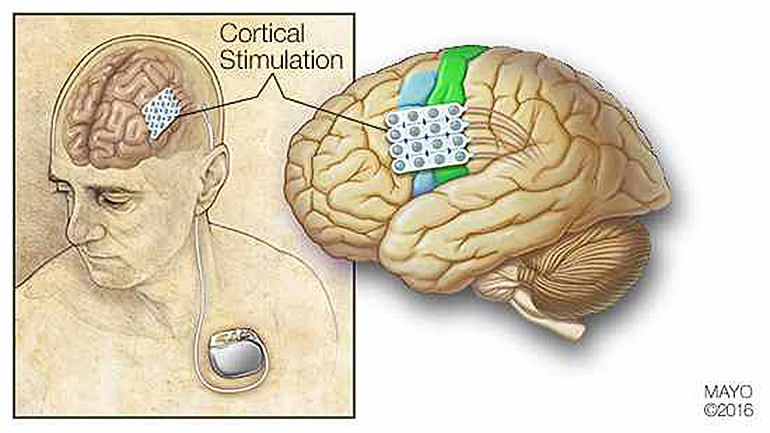
In what may be a major development for some patients with epilepsy, researchers at Mayo Clinic have shown that continuous electrical stimulation of the brain’s cortex can reduce the frequency of seizures, and in some cases their intensity and duration. The study, published in JAMA Neurology relied on applying an electrode grid to the brain, essentially the same type that’s commonly used to pinpoint the source of seizures, but to use them to send an electric current to the brain. Thirteen patients with drug-resistant focal epilepsy for whom surgery would not be appropriate had temporary electrodes applied. Once they showed a positive response to the electric therapy, the electrode array was replaced with a more permanent device.

Ten of the thirteen patients had improved outcomes in both the intensity of their seizures and their life satisfaction. Majority also had a more than 50% decline in seizures compared to before therapy and six of the people had no disabling seizures at all.

Interestingly, interictal epileptiform discharges, which are electrical biomarkers that can be used to identify the source of seizures, dropped in quantity within minutes after electric current began to be delivered.

There’s still a lot of clinical trials that will need to be done to confirm these findings and to look for any potential side effects, but it certainly looks like the folks at Mayo are onto something here.

Study in JAMA Neurology: Chronic Subthreshold Cortical Stimulation to Treat Focal Epilepsy